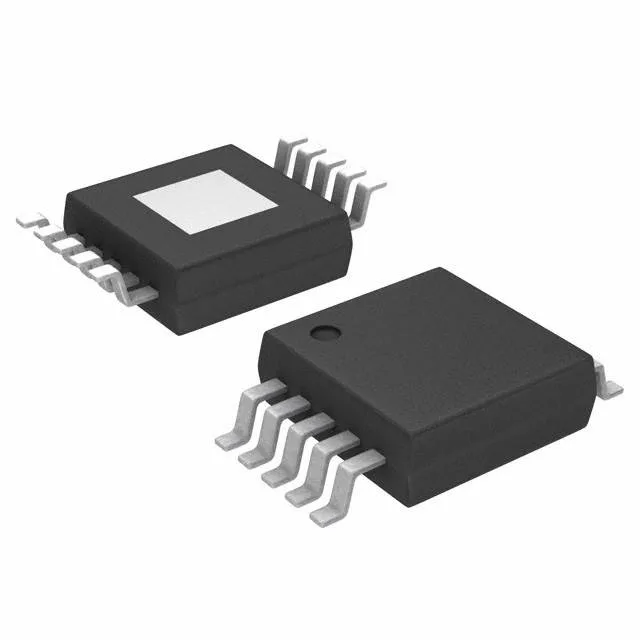
Texas Instruments TPS51100DGQ — Signal Isolation

TI TPS51100DGQ DDR Termination Regulator, 4.75-5.25V Input

MPNTPS51100DGQ
End of Life

Texas Instruments TPS51100DGQ, DDR Converter Regulator, 1 Output, 4.75V~5.25V Input, 1.2V~3.6V Output, Surface Mount, 10-HVSSOP, -40°C~85°C, Tube.

$1.74Ref. price · indicative, final on quote
Packaging10-PowerTFSOP, 10-MSOP (0.118", 3.00mm Width)
RoHSROHS3 Compliant
Independent supplier — new & surplus stockAuthenticity-screened · ESD-safe packingListing updated Aug 2026

Specifications

TPS51100DGQ specifications
ParameterValue
MountingSurface Mount
Voltage - input4.75V ~ 5.25V
Voltage - output1.2V ~ 3.6V
I/O channels1
Operating temperature-40°C ~ 85°C
PackageTube
ApplicationsConverter, DDR
Case10-PowerTFSOP, 10-MSOP (0.118\", 3.00mm Width)

Product details

DDR termination regulator for the 5 V rail

The Texas Instruments TPS51100DGQ is a single-output DDR termination regulator designed to convert a 4.75 V to 5.25 V input rail into a programmable output from 1.2 V to 3.6 V. It is explicitly built for DDR memory termination (VTT) in converter applications, not a general-purpose step-down converter.

Input and output — what drives the BOM fit

Input range is 4.75 V to 5.25 V; output range is 1.2 V to 3.6 V.

It is not qualified to AEC-Q100, so it is not the pick for under-hood automotive or engine-bay environments where extended temperature and vibration specs are required.

Frequently asked questions

Can TPS51100DGQ be used for DDR4?

Yes, the output can be set to 1.2 V, which is the VTT level for DDR4 termination. The part is a DDR converter regulator, so it is suited for DDR4 memory power.

What is the difference between TPS51100DGQ and TPS51100DGQR?

The difference is packaging: TPS51100DGQ ships in a Tube, while the DGQR suffix typically indicates Tape & Reel packaging. Electrically they are identical.

What is the closest functional second-source to TPS51100DGQ?

The TPS53317RGBR is a peer DDR converter from TI with a single output, but it operates from a 1.0 V input supply and uses the D-CAP+ control scheme. It is not a pin-for-pin replacement — verify the pinout and compensation before substituting.