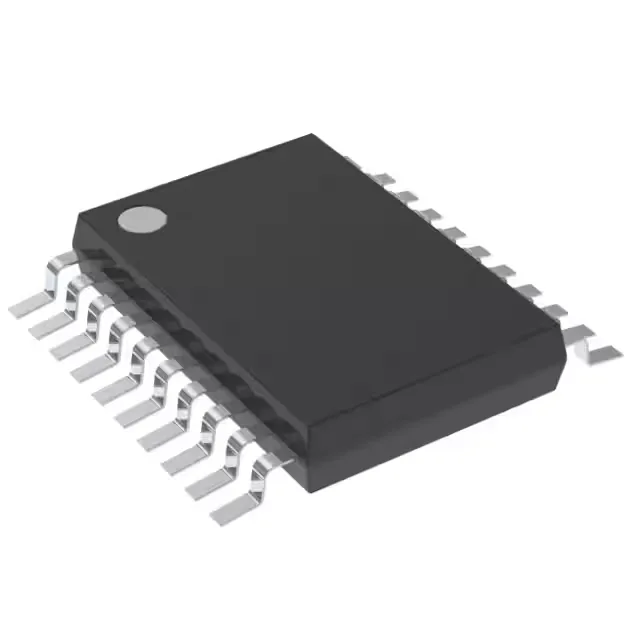
What the 74HC240 does that the 74HC241 does not
The SN74HC240NSR is an inverting buffer with 3-state outputs — meaning the output is the opposite of the input when enabled, and goes high-impedance when the output-enable pin is pulled high. The non-inverting sibling, the 74HC241, passes the signal through unchanged. If your bus needs a polarity flip and isolation, this is the one; if you just need a repeater, grab the 241. It packs two elements of four bits each, giving you eight inverting channels in one 20-SOIC package. The 3-state outputs let multiple devices share a bus line — pull the output-enable high and the pin stops driving, so another device can take over without contention.
Supply voltage and output drive — what it means on the bench
Runs on 2 V to 6 V, which covers the common 3.3 V and 5 V logic rails without needing a separate level translator. The 7.8 mA output current high and low is typical for the 74HC family — enough to drive a few CMOS inputs or a low-current LED, but not a relay or a long cable. If you need more drive, the 74HCT or 74ACT series would be the next step up. The -40°C to 85°C operating temperature range is the standard industrial grade. It will work in a heated factory floor or an outdoor enclosure that does not see direct sun; for under-hood or downhole applications, you would want the -55°C to 125°C military range.
Lifecycle and sourcing — still a current part
The 20-SOIC package is a standard footprint, so it is widely stocked across the supply chain.