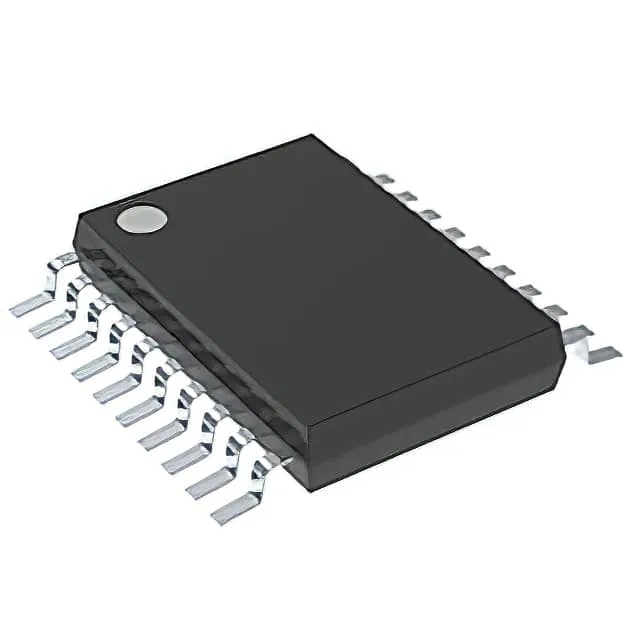
Octal inverting buffer with 3-state bus hold
The SN74AHC240PWR is a dual 4-bit inverting buffer from Texas Instruments' 74AHC family, packing eight channels of 3-state output into a 20-pin TSSOP. It operates across a 2 V to 5.5 V supply range, making it a direct drop-in for mixed-voltage logic buses where the core runs at 3.3 V but the peripheral bus needs 5 V tolerance on the input side.
Supply range and output drive at the board level
With 8 mA source and sink capability per channel, this buffer handles standard CMOS and TTL fan-out for a typical load of four to six downstream inputs without external line drivers. The 3-state outputs let multiple devices share a common data bus — the high-impedance state isolates the buffer when another device drives the line, which is the standard bus-sharing arrangement on a memory or peripheral backplane. The -40 °C to +85 °C industrial temperature grade covers most factory-floor and outdoor telecom enclosures; the timing margins at the cold corner are tighter than at room temperature, so a design targeting 85 °C ambient should verify the propagation delay at the hot corner against the setup-time requirement of the receiving flip-flop.