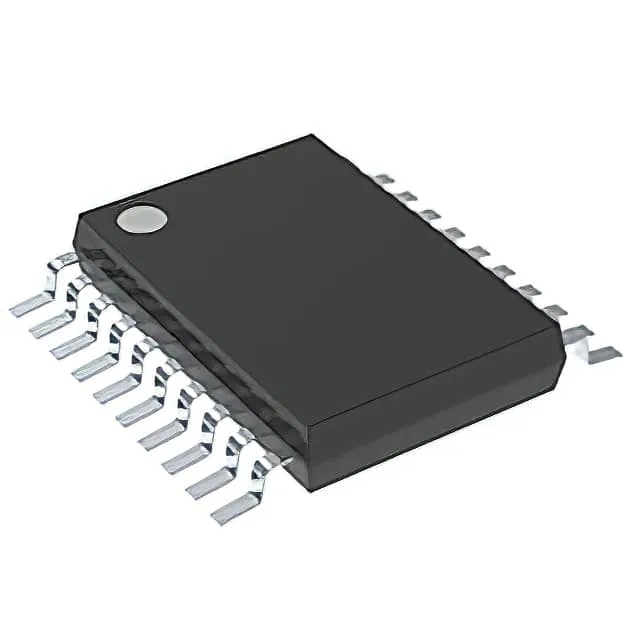
Texas Instruments SN74AC240PW — Logic ICs

SN74AC240PW Buffer Inverting 3-State, 2V–6V, 20-TSSOP – TI

MPNSN74AC240PW
End of Life

Texas Instruments 74AC series SN74AC240PW, Buffer Inverting, 3-State, 2V to 6V supply, 24mA output drive, 20-TSSOP, -40°C to 85°C.

$0.93Ref. price · indicative, final on quote
Packaging20-TSSOP (0.173", 4.40mm Width)
RoHSROHS3 Compliant
Series74AC
Independent supplier — new & surplus stockAuthenticity-screened · ESD-safe packingListing updated Aug 2026

Specifications

SN74AC240PW specifications
ParameterValue
Series74AC
Logic typeBuffer, Inverting
Output type3-State
MountingSurface Mount
Voltage2V ~ 6V
Current - output high, low24mA, 24mA
Operating temperature-40°C ~ 85°C (TA)
PackageTube
Case20-TSSOP (0.173\", 4.40mm Width)
Number of elements2
Number of bits per element4

Product details

What this buffer does that a plain HC240 won't

The SN74AC240PW is a dual 4-bit inverting buffer with 3-state outputs from TI's 74AC family. The inverting path cleans up a signal polarity issue in a single package, and the 3-state outputs let you share a bus without contention. Each output can sink or source 24mA, enough to drive a handful of CMOS inputs or a small relay coil through a resistor.

Supply voltage — why 2V to 6V matters on a mixed-voltage board

If your design has a 3.3V microcontroller talking to a 5V peripheral, the SN74AC240PW can sit on either rail and still meet the input thresholds. The AC family's faster edge rates compared to HC logic also help when you are pushing clock or data lines above 20 MHz.

Package and rework — 20-TSSOP on a field swap

The 20-TSSOP package (0.173" body width, 4.40mm) is a fine-pitch surface-mount part. On a field repair, you will want a hot-air station with a fine nozzle and a steady hand — the 0.65mm lead pitch does not forgive a soldering iron slip. The part is marked with TI logo and date code, so orientation is clear from the pin-1 dot. No ESD-sensitive handling beyond the usual CMOS precautions.

Frequently asked questions

What is the difference between SN74AC240 and SN74HC240?

The AC family offers faster propagation delays and higher output drive than the HC family at the same supply voltage. For example, at 5V the AC240 typically switches in under 6 ns versus 10–15 ns for the HC240. Both are inverting buffers with 3-state outputs, but the AC version is better suited for higher-speed buses.