Texas Instruments LM723H/NOPB — Power Management (PMIC / Gate Driver)
Technical Documents PDF / CAD
RoHS Compliant · Lead-Free EIA-481 Standard
Texas Instruments / Power Management (PMIC / Gate Driver)

Texas Instruments LM723H/NOPB, 150mA Adjustable Regulator

MPN LM723H/NOPB
End of Life Spot Stock · 24-48h Dispatch 100% Original Sealed

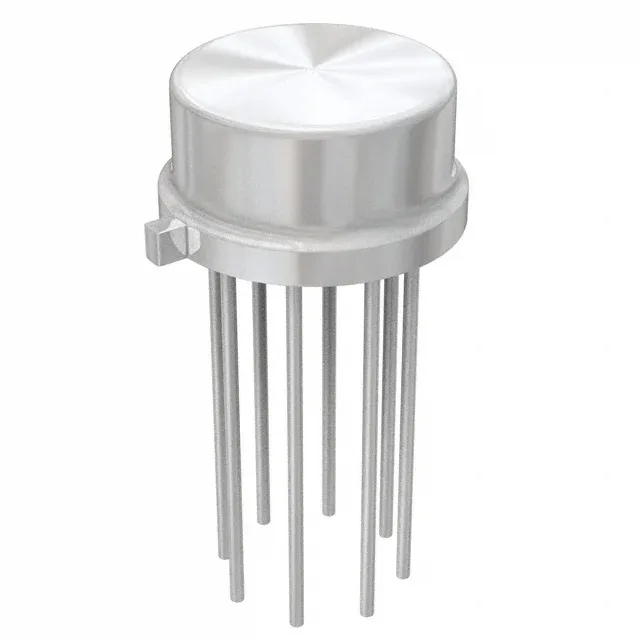
Texas Instruments LM723H/NOPB adjustable positive voltage regulator, 150 mA output, 2 V to 37 V output range, TO-100-10 metal can, through hole, bulk.

In Stock: 1 pcs
MOQ: 1 pcs
Logistics: DHL / FedEx DAP (Global Express · 3-7d) Russia & CIS DDP (Door-to-Door Cleared)
Dispatch: Shenzhen / HK
Unit Price (USD)
$29.22 / pc
Direct Purchase Ready
Volume Pricing Breaks Confirmed upon quotation
1+ pcs
$29.22
Working on a production BOM or have a target unit price? Submit Target Price
Buy Now

$29.22 / ea

1 in stock — maximum per order · 3–4 days lead time

Upload Full BOM List
[SPEC] Essential Parameters Snapshot Full Specifications (14)
Package / Case TO-100-10 Metal Can
ALT
Facing long factory lead times or allocation on LM723H/NOPB? Verified pin-compatible alternatives available with active Shenzhen stock and 100% solder-ready footprint match.

Full Technical Specifications

14 Parameters
LM723H/NOPB specifications
Parameter / AttributeSpecification / Value
Output typeAdjustable
MountingThrough Hole
Voltage - input40V
Voltage - output37V
Voltage - output (Min (Fixed))2V
Output current150mA
Operating temperature-55°C ~ 125°C
PSRR86dB ~ 74dB (50Hz ~ 10kHz)
PackageBulk
CaseTO-100-10 Metal Can
Control featuresCurrent Limit, Frequency Control
Protection featuresShort Circuit
Number of regulators1
Output configurationPositive
100% Footprint Match · Solder-Ready (No PCB Redesign Needed)

Need Stock or a Drop-in Second-Source for LM723H/NOPB?

Package: DIP-14 / TO-100 metal can · Pin-compatible replacements with immediate Shenzhen spot stock

Footprint Match 96%
Supply Chain & Allocation Reality:

The LM723 is not a regulator but the CONTROLLER of one: an internal reference (about 7.15V), an error amplifier, a small pass transistor good for 150mA, and a current limiter with foldback - the kit every bench supply and lab-grade linear of the 1970s and 80s assembled around an external pass transistor, which is why the same chip runs at 150mA or 10A depending on what the schematic bolted to it. Its variants are the substitution content: the C grade moves the temperature and reference windows, and the metal-can body quietly drops the Vz reference pin, which the folded and floating designs cannot live without.

Verified Pin-Compatible Replacements (3 verified alternatives)

LM723C TI (National lineage) / STMicroelectronics DIP-14 / TO-100
100% Drop-in (Zero Code Change)
Availability & Target Pricing:

The Commercial Grade

Shenzhen Spot Stock (24-48h Dispatch)

Electrical & Core Specs:

Electrically the same controller: the same reference core, error amplifier, limiter and 150mA internal pass - with the commercial temperature window (about 0 to 70C) and a correspondingly wider reference tolerance band instead of the full industrial one.

Same input ceiling (40V class) and the same 2V-37V output architecture through the external pass stage.

Compatibility & Drop-In Notes: The grading rule of every linear family runs here too: precision upward is free, downward re-opens margins someone calculated. The window is in the datasheet, not on the part body.
Package & Solder Footprint: Same DIP-14 pinout; both package options exist in each grade.
Shenzhen Warehouse Stock & MOQ: Stocked; quote the grade the schematic assumed.
CA723 / TO-100 can versions RCA lineage / multiple TO-100 (10-pin metal can)
Functional Equivalent
Availability & Target Pricing:

The Can Body and the Missing Pin

Shenzhen Spot Stock (24-48h Dispatch)

Electrical & Core Specs:

The metal-can body of the same controller - and its structural difference: the can has fewer pins, so it does not bring out the Vz reference output that the DIP-14 exposes, and its pin 5 ties to the case.

Same electrical envelope; the thermal path differs (can about 136 K/W against the DIP about 120).

Compatibility & Drop-In Notes: The substitution checklist for package moves on this chip: count the pins the schematic USES, not the pins the package has. Vz users stay in the DIP; everyone else may choose by thermal fit.
Package & Solder Footprint: 10-pin can against 14-pin DIP: physically and electrically not interchangeable in one direction.
Shenzhen Warehouse Stock & MOQ: Stocked where genuine; the vintage-restoration body.
LM317 / LM338 (modern simplification) TI / STMicroelectronics / multiple TO-220 / TO-3
Functional Equivalent
Availability & Target Pricing:

When the Features Are Not Needed, the Three Pins Win

Shenzhen Spot Stock (24-48h Dispatch)

Electrical & Core Specs:

The modern answer for the jobs that never used the special features: a three-terminal adjustable regulator with its own protection, no compensation engineering, no external pass arithmetic - at the cost of the foldback limiter, the remote sense and the high-voltage envelope the 723 design carries.

The three-terminal family stops near 40V total; the 723 architecture with an external pass goes past input ceilings the TO-220 parts cannot.

Compatibility & Drop-In Notes: The redesign rule: if the schematic uses Vz, foldback or remote sense, modernizing means designing a new supply, not substituting a part. If it uses none of them, the three-terminal family delivers the same bench experience in three pins.
Package & Solder Footprint: Completely different circuits - this card is a redesign signpost, not a substitution.
Shenzhen Warehouse Stock & MOQ: Stocked; both eras available.
Buyer & Quality Checklist for Sourcing Alternatives
  • The 723 is a controller: 150mA internally, everything above that is the external pass transistor the design bolted to it. Repairs that measure the regulator at its own pin and stop have measured a fraction of the circuit.
  • The two values repairs disturb first: the compensation capacitor (pin 13, about 100pF class) and the current-sense resistor (about 0.7V divided by the intended limit). Oscillation and early current limiting are usually these two, not the chip.
  • The Vz pin is a package fact: the DIP-14 brings out the reference output, the 10-pin can cannot - designs that used it for negative or floating rails cannot take the metal body. Count the used pins before any package move.
  • Grades: LM723 against LM723C differ in temperature window and reference tolerance, not in circuit - keep the base grade where the calibration or the environment assumed it.
  • Dropout is about 3V on this architecture: the input-output differential is designed into the vintage transformer and heatsink math, and modern low-dropout expectations do not transfer.
  • Foldback limiting is a resistor network decision, not a chip feature to be assumed: a repaired supply that now limits at the wrong current is reporting the sense network, not a bad controller.
Frequently Asked Technical Questions

Q: Can an LM723C replace an LM723?

A: Electrically identical controller; the C grade narrows the temperature window and widens the reference tolerance band. Fine for room-temperature equipment; keep the base grade where the tighter reference window was the calibration assumption.

Q: What is the difference between the 14-pin DIP and the TO-100 can?

A: The can has fewer pins, so it does not bring out the Vz reference output the DIP exposes, and its pin 5 connects to the case. Negative and floating-rail designs that used Vz must stay in the DIP; thermal resistance differs slightly between the bodies.

Q: Why does my 723 supply go into current limit too early or oscillate?

A: Check the two design values that repairs disturb first: the current-sense resistor network (the limit is roughly 0.7V divided by it) and the compensation capacitor on pin 13. The controller is reporting those values faithfully.

Technical Details & Description

Voltage range and output capability

The LM723H/NOPB accepts up to 40 V input and delivers an adjustable output from 2 V up to 37 V, sourced at up to 150 mA continuous. That 150 mA ceiling is the thermal limit in the TO-100 can — the package's junction-to-ambient resistance sets the real derated current at elevated ambient, so a 125 °C environment will pull that number down.

PSRR across the audio band

Power supply rejection ratio runs from 86 dB at 50 Hz down to 74 dB at 10 kHz. That 12 dB roll-off across two decades means the regulator attenuates mains ripple well but passes higher-frequency switching noise more readily — a post-filter LC stage may be needed if the load is sensitive above 10 kHz.

Package and temperature grade

The metal can provides a hermetic seal and a lower thermal resistance path to the board than plastic DIPs of the same era; the 10-pin circular layout requires a dedicated footprint, not a standard DIP pattern.

Protection and control features

Built-in short circuit protection and current limit plus frequency control are on-chip. The frequency control pin allows an external capacitor to set the regulator's internal oscillator frequency, which is useful for synchronising multiple regulators or shifting switching noise out of a sensitive band.

Frequently asked questions

What is the PSRR of LM723H/NOPB?

PSRR is 86 dB at 50 Hz, rolling off to 74 dB at 10 kHz. This means the regulator strongly attenuates mains-frequency ripple but provides less rejection above 10 kHz.

What compliance documentation does Texas Instruments provide for LM723H/NOPB?

The part is ROHS3 Compliant per Texas Instruments. Standard TI compliance documentation (RoHS, REACH) is available through the distributor upon request.

LM723H/NOPB
Verified Allocation
Quote