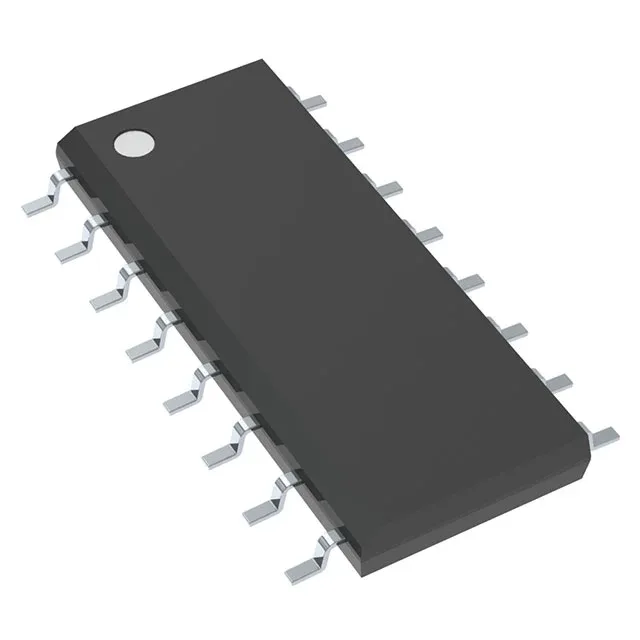
Texas Instruments LM3524DM/NOPB — Analog & Data Acquisition

LM3524DM/NOPB PWM Controller, Buck/Boost, 16-SOIC, Active

MPNLM3524DM/NOPB
End of Life

Texas Instruments LM3524DM/NOPB, PWM controller for step-up/step-down (buck/boost) topologies, single transistor driver output, 8V to 40V supply, 49% max duty cycle, 0°C to 125°C junction, 16-SOIC surface mount package.

$1.84Ref. price · indicative, final on quote
Packaging16-SOIC (0.154", 3.90mm Width)
StockContact for availability
MOQ1 pcs
  • 100% new & originalTraceable channels only — no refurbs, no pulls, no remarked parts.
  • Date & lot codes on quoteStated per line before you commit; label photos on request.
  • MSL-compliant ESD packingMoisture-sealed bags with indicator cards; reels photo-verified.
  • PayPal buyer protectionPay by T/T, PayPal or Payoneer — card payments covered end to end.

Specifications

LM3524DM/NOPB Technical Specifications
ParameterValue
Output typeTransistor Driver
Mounting typeSurface Mount
Voltage - supply (Vcc (Vdd))8V ~ 40V
Number of outputs1
Output phases1
Duty cycle49%
Operating temperature0°C ~ 125°C (TJ)
PackageTube
FunctionStep-Up, Step-Down
TopologyBuck, Boost
Clock syncNo
Case16-SOIC (0.154\", 3.90mm Width)
Control featuresCurrent Limit, Enable, Frequency Control
Output configurationPositive or Negative
Synchronous rectifierNo

Product details

PWM controller for buck and boost regulation

The Texas Instruments LM3524DM/NOPB is a PWM controller IC designed for both step-up (boost) and step-down (buck) switching regulator topologies. It integrates the control logic and a single transistor driver output on a single chip, operating from a supply rail of 8V to 40V. This makes it a fit for a range of non-isolated DC-DC converter designs in industrial and commercial power supplies, where a single controller must handle either topology without a major board respin.

Supply range and duty cycle — what they mean for your converter

The output configuration supports positive or negative rails, which is useful for generating a negative bias supply from a positive input bus, common in op-amp or LCD bias circuits.

Temperature grade and package fit

Rated for a junction temperature range of 0°C to 125°C, this part is specified for commercial and some industrial environments where the ambient stays above freezing. It is not rated for -40°C cold-crank conditions — if the design must start at -40°C, look at the automotive-grade LM5150QURUMRQ1 instead. The 16-SOIC (0.154" body width, 3.90 mm) package is a standard surface-mount footprint shared by many PWM controllers. The Tube shipping medium is typical for prototype and low-volume builds; production quantities are usually ordered on tape and reel through distribution.

Control features and topology limits

Control features include current limiting, an enable pin for shutdown, and frequency control — the latter lets you set the oscillator timing with an external RC network. There is no clock sync input, so synchronizing multiple converters to a common switching frequency requires external logic or a different controller. Synchronous rectification is not supported, so the external diode rectifier will dominate the thermal budget at higher output currents.

Lifecycle and sourcing posture

It is RoHS3 compliant (NOPB suffix). No official second-source alternate is listed in the record, but the UCC2806DWTR from TI is a functional peer in a similar package with a 50% duty cycle and dual outputs — verify pin compatibility before substituting.

Frequently asked questions

Can LM3524DM/NOPB be used for a boost topology?

Yes, the part supports both buck and boost topologies. However, the 49% maximum duty cycle limits the practical step-up ratio to about 2:1 — for higher boost ratios, a controller with a higher duty cycle limit is needed.

What is the closest functional second-source for LM3524DM/NOPB?

The Texas Instruments UCC2806DWTR is a functional peer with a similar 16-SOIC package, 50% duty cycle, and current-limit control. It has dual outputs and supports synchronous rectification, so verify pin compatibility and circuit changes before substituting.