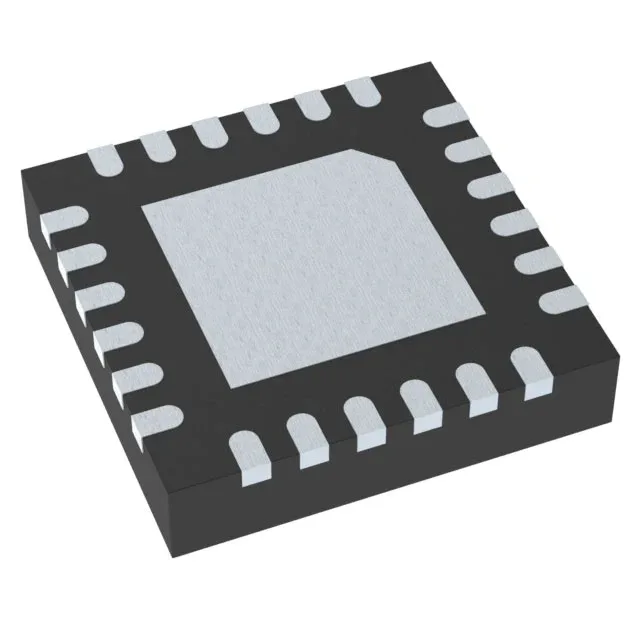
It delivers a programmable charge current up to 2A via an I²C interface, letting firmware adjust the charge rate on the fly — useful for balancing charge time against thermal budget in a compact enclosure. The part integrates over-current, over-temperature, and over-voltage fault protection, reducing the need for external supervisory circuitry.
The 2A max charge current suits single-cell Li-Ion packs. The current is I²C-programmable, so the same PCB layout can support multiple pack sizes by changing firmware — no resistor swap. The constant-current constant-voltage profile is standard for Li-Ion; the I²C bus lets the host controller terminate charge or reduce current during high system load.