What the charge current and regulation voltage mean for a 1S Li-ion pack
The BQ24158YFFT is a single-cell (1S) Li-Ion/Polymer charger that regulates the battery voltage to 4.44 V max and delivers a programmable charge current up to 1.25 A. For a typical 1000 mAh cell, 1.25 A gets you to full in roughly an hour, minus the constant-voltage taper. The 6 V max supply input means a 5 V USB rail or a 5.5 V regulated adapter works without a pre-regulator, but a 12 V rail needs a step-down ahead of this IC. The I²C interface lets the host adjust the charge current and timer on the fly — useful for thermal throttling when the board is inside a sealed enclosure and the ambient hits 85 °C, the top of the operating range.
Package and board-fit for the 20-DSBGA
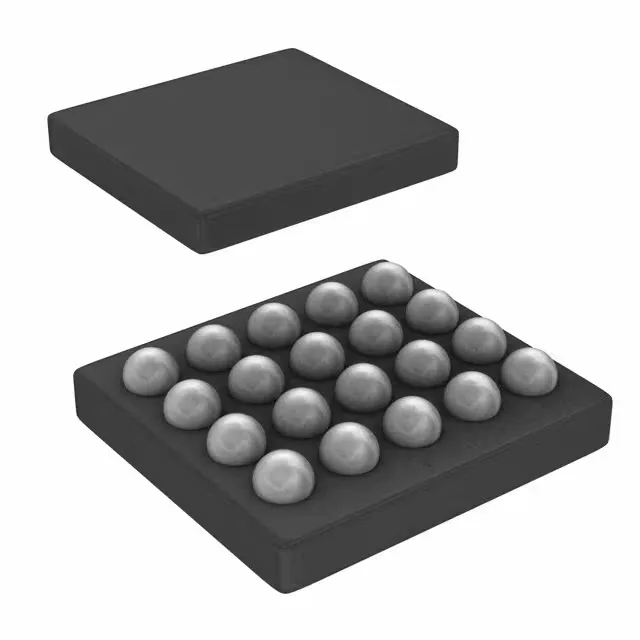
Housed in a 20-bump DSBGA (20-UFBGA), the BQ24158YFFT is a wafer-level chip-scale package with a 0.4 mm pitch. The small footprint saves board area but demands a controlled solder-paste stencil and an X-ray inspection step to verify bump wetting. The surface-mount assembly is standard for high-volume pick-and-place lines. The -30 °C to 85 °C operating temperature range covers industrial-grade equipment — outdoor IoT gateways, portable medical monitors, and handheld scanners that live in a hot warehouse or a cold loading dock.
Protection and programmability reduce external BOM
Integrated over-temperature and over-voltage fault protection means the charger handles a bad adapter or a cell disconnect without an external supervisor IC. The programmable charge-current and safety-timer features let the firmware set the charge profile per the cell manufacturer's recommendations.
Active lifecycle and compliance status
It is ROHS3 compliant, so it meets the EU RoHS exemption-free requirements for new product introductions.