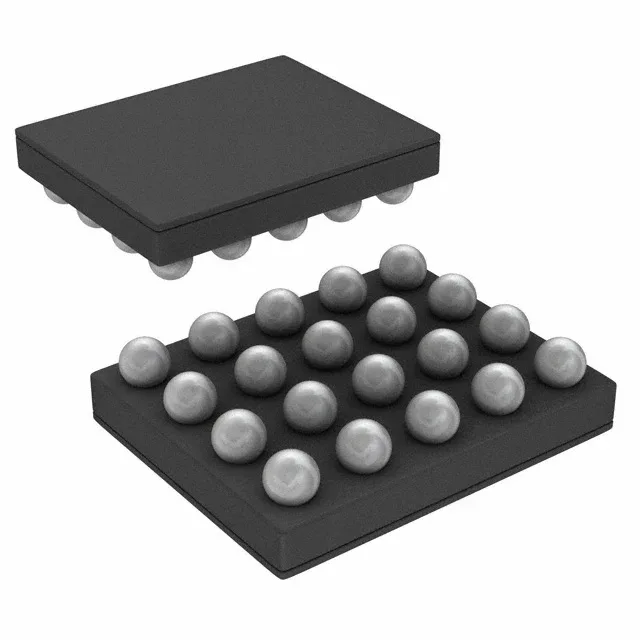
The BQ21061YFPR: It handles a 2.4V to 4.6V battery pack voltage range and delivers up to 500 mA charge current, programmable via the I²C interface. Supply input maxes at 5.25 V, so it fits directly on a standard 5 V USB or regulated rail without an external pre-regulator. The constant-current charge rate is set through the I²C bus — no external resistor divider needed for the charge current setpoint.
500 mA charge ceiling and 4.6 V battery termination
The 500 mA maximum charge current suits single-cell Li-Ion packs in the 200-1000 mAh range — think wearable earbuds, medical patches, or IoT sensor nodes where the charge time at 0.5C is around two hours. The programmable current feature lets you dial it down for smaller cells without changing the BOM. Battery regulation voltage tops at 4.6 V, which covers standard Li-Ion termination at 4.2 V and the higher 4.35 V or 4.4 V chemistries used in some high-energy-density cells. The 2.4 V minimum pack voltage means it can recover deeply discharged cells above the battery's undervoltage lockout threshold. Over-current fault protection is built in — the charger enters constant-current mode and limits the output if the load tries to draw beyond the programmed setpoint. No external current-sense resistor needed; the protection loop is internal.
20-DSBGA package and field-fit considerations
The 20-XFBGA DSBGA package (0.4 mm pitch typical) means the PCB footprint is small — roughly 2 mm × 2 mm — but the fine-pitch BGA demands a solder-paste stencil and reflow profile matched to the JEDEC standard for this package family. No lab bench, no hot-air station: this is a production-reflow part, not a field-swap candidate. The surface-mount package and I²C interface keep the routing simple — two pull-up resistors on the SDA/SCL lines and a bypass cap on the input are the main external components.
Active production and sourcing posture
Sourced through authorized and independent distribution channels.