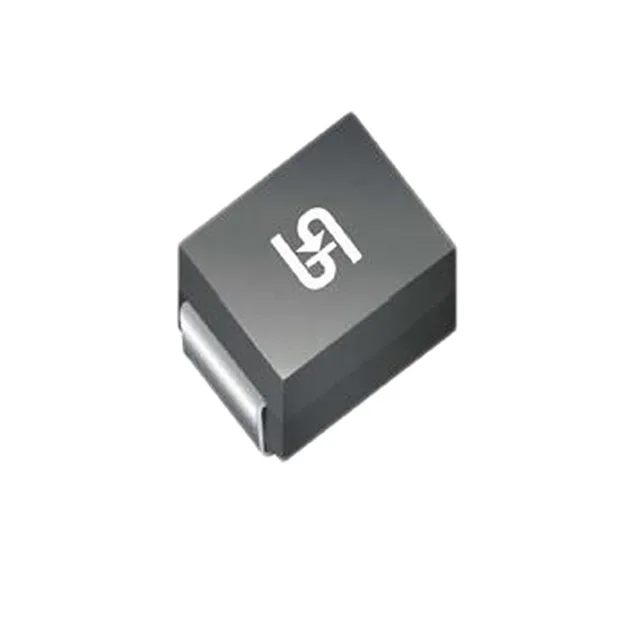
1.5 kW peak pulse in a DO-214AB footprint
The 1.5SMC15AHR7G: The 12.8 V reverse standoff voltage means it sits across a 12 V rail and begins clamping only when the transient exceeds that threshold — the rail stays undisturbed during normal operation. With a breakdown voltage range starting at 14.3 V and a maximum clamp of 21.2 V at 74 A peak pulse current, this part protects downstream electronics from load-dump and inductive-kick transients on automotive 12 V buses. The -55 °C to 150 °C junction temperature range covers underhood and powertrain environments where ambient peaks near 125 °C.
AEC-Q101 — the grade the OEM auditor expects
This part carries AEC-Q101 qualification, the automotive discrete semiconductor stress-test standard. That means it has passed the full suite of reliability screens: temperature cycling, high-temperature reverse bias, humidity bias, and pre- and post-stress electrical test. For an ECU BOM that must present PPAP documentation at audit, the AEC-Q101 grade is the evidence the OEM quality team asks for — not a datasheet note that says 'automotive-capable'. The production status is Active per the manufacturer's lifecycle record.
The 74 A peak pulse current rating is the current the device sinks at the 21.2 V clamp voltage under the standard 10/1000 µs surge — a common transient shape for automotive load-dump and ISO 7637-2 pulse testing. The 1.5 kW peak power rating is the product of clamp voltage and pulse current at that waveform; a shorter pulse (8/20 µs) allows a higher peak current, but the 10/1000 µs rating is the conservative figure for design margin. The unidirectional configuration (single channel) means the TVS conducts only on positive transients above the breakdown voltage. For a 12 V rail that never sees reverse polarity, this is the correct choice — a bidirectional part would clamp negative excursions unnecessarily.