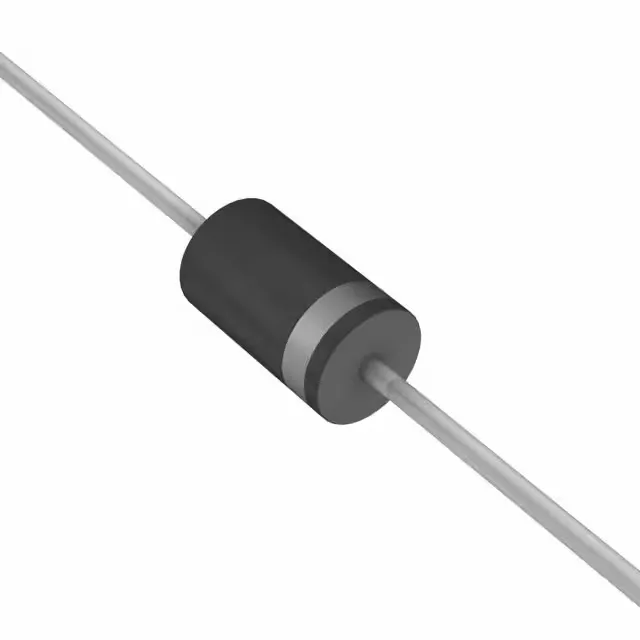
1500 W peak pulse — the surge rating that decides the fit
The 1.5KE100A B0G: That 1.5 kW rating is the energy the part absorbs in a single surge event — a lightning-induced transient or an inductive load dump on an 85.5 V rail. If the downstream silicon's breakdown voltage sits above 137 V, the TVS clamps the surge before the protected device sees damaging overvoltage.
Clamp voltage and standoff — the protection window
Reverse standoff voltage is 85.5 V typical — this is the DC rail voltage the TVS holds without conducting leakage. The margin between the rail and the clamp determines how much overvoltage the protected circuit sees: a 24 V margin (85.5 V to 95 V breakdown) is typical for a 72 V nominal bus with transients. The 10/1000 µs waveform is the industry-standard surge shape for telecom and industrial power lines — 10 µs rise, 1000 µs half-decay. The 11.4 A peak current at that pulse shape is the maximum the part can handle once. For repetitive surges, derate the peak pulse power per the datasheet's pulse derating curve.
Temperature range and package — deployment context
The DO-201AA (DO-27) axial package is through-hole mounted — the lead diameter and body length suit standard 0.052-inch PCB holes or point-to-point wiring. Bulk packaging means the parts ship loose in a tube or bag, not taped and reeled.