256 Kbit I²C EEPROM for automotive and industrial buses
The STMicroelectronics M24256-DRMN3TP/K is a 256 Kbit serial EEPROM organized as 32K x 8 bits, accessed over an I²C bus at up to 1 MHz. It is part of the Automotive, AEC-Q100 series, qualified for use in vehicle electronics and other harsh environments. The wide supply range of 1.8V to 5.5V means it can sit on a legacy 5V CAN bus or a modern 3.3V/1.8V microcontroller rail without a level translator.
The 450 ns access time is the time from the I²C slave address match to the first data bit being available on SDA. At a 1 MHz clock (1 µs period), the master must stretch SCL low long enough for the EEPROM to respond. In practice, this means the bus master's I²C peripheral needs to support clock stretching or insert a wait state after the address byte. If your MCU's I²C block does not handle stretching automatically, you may see a NACK on the first read byte unless you pad the timing in firmware.
Write-cycle timing for production programming
The write cycle time is 5 ms per page or word. For a 256 Kbit device, that means writing the full array in page mode (typically 64-byte pages) takes about 2.5 seconds if you poll the acknowledge polling after each page write. In a production programming jig, this sets the floor for throughput — you cannot gang-program faster than the write cycle allows without risking incomplete writes.
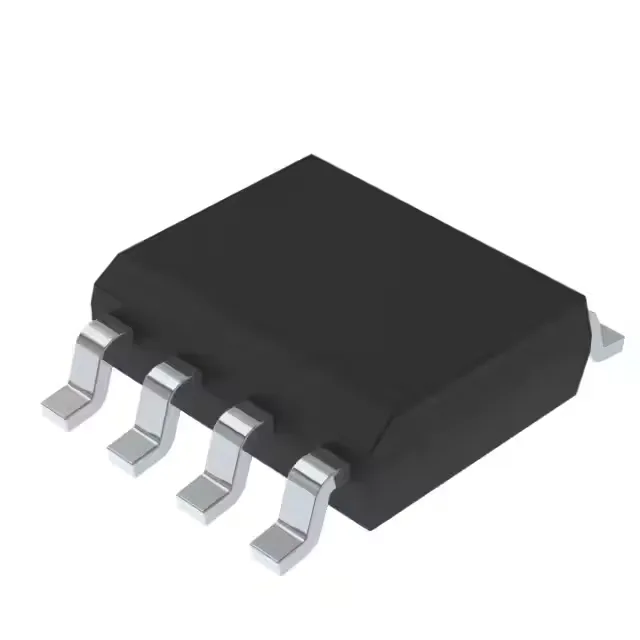
The part comes in an 8-SOIC package (3.90 mm body width, 0.154" pitch), surface-mount only. The shipping options include Tape & Reel and Cut Tape, so it fits both automated pick-and-place lines and prototype hand-assembly.
It is ROHS3 compliant.