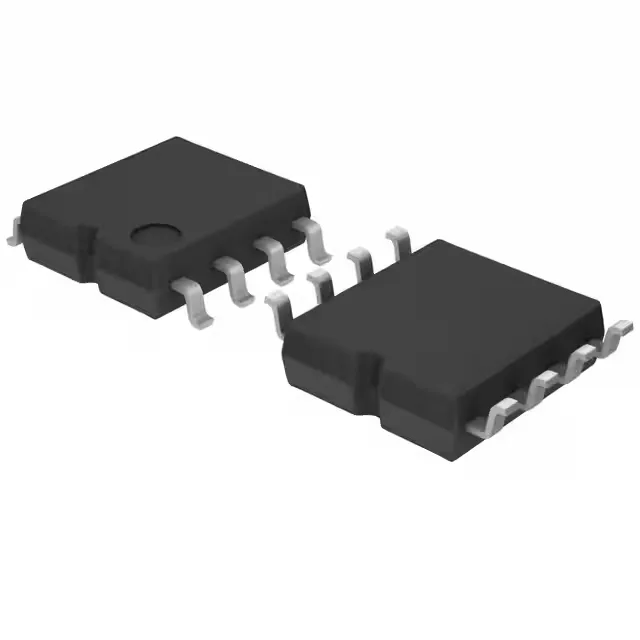
Dual CMOS comparator for low-power threshold and zero-crossing detection
The BU7233F-E2: The BU7233F-: The ROHM BU7233F- is a dual CMOS comparator with open-drain outputs, designed for battery-powered sensor interfaces, zero-crossing detectors, and window comparators where quiescent current matters more than propagation delay. Each channel sinks up to 6 mA at 3 V, and the 1 pA typical input bias current lets you use high-value resistor dividers without adding offset error. The 1.8 µs typical propagation delay is adequate for 10 kHz-level switching loops and overcurrent detection in motor drives, but not for high-speed PWM edge capture above 100 kHz.
Supply range and quiescent current — sizing the rail and the battery budget
The 25 µA maximum quiescent current per device (both comparators active) makes this a candidate for always-on threshold monitors in IoT edge nodes and handheld instruments. At 1.8 V the output drive drops, but the comparator still switches reliably — verify the 6 mA output current spec at your actual rail voltage if driving an LED or optocoupler directly.
Open-drain output — wired-OR flexibility and level translation
The open-drain output lets you pull up to a different voltage than the comparator supply, so a 3.3 V sensor comparator can drive a 5 V logic input directly. It also supports wired-OR connections for shared interrupt lines or fault buses. The pull-up resistor value needs to balance rise time against current draw — at 5 V with a 10 kΩ pull-up, the rise time into a 50 pF load runs about 500 ns, which is fine for most slow threshold applications but adds to the 1.8 µs propagation delay budget.
Temperature grade and environment — industrial-rated for outdoor and factory use
The 80 dB typical CMRR and PSRR reject common-mode noise and supply ripple common in industrial environments with long sensor cables and switching power supplies. The 11 mV maximum input offset at 3 V is typical for a general-purpose CMOS comparator — not precision-grade, but adequate for over/under-voltage detection and zero-crossing circuits.
For dual-sourcing resilience, the open-drain CMOS comparator family has several pin-compatible alternatives from other manufacturers — verify the input offset and supply range against your design's limits before substituting.