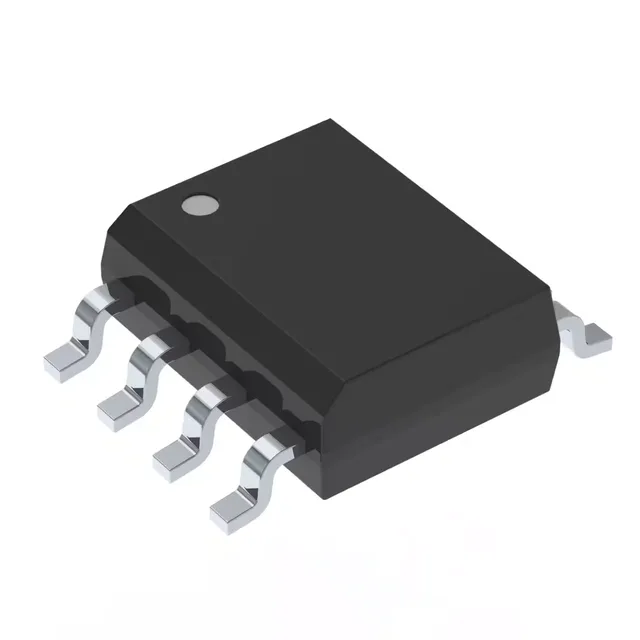
ROHM Semiconductor BR93G76F-3BGTE2 — Microcontrollers & Processors (MCU / MPU / DSP)

ROHM BR93G76F-3BGTE2 8Kbit Microwire EEPROM, 3 MHz, 8-SOP

MPNBR93G76F-3BGTE2
End of Life

ROHM BR93G76F-3BGTE2 serial EEPROM, 8Kbit (512 x 16), Microwire interface, 3 MHz clock, 1.7V to 5.5V supply, -40°C to 85°C, 8-SOP package.

$0.67Ref. price · indicative, final on quote
Packaging8-SOIC (0.154", 3.90mm Width)
StockContact for availability
MOQ1 pcs
  • 100% new & originalTraceable channels only — no refurbs, no pulls, no remarked parts.
  • Date & lot codes on quoteStated per line before you commit; label photos on request.
  • MSL-compliant ESD packingMoisture-sealed bags with indicator cards; reels photo-verified.
  • PayPal buyer protectionPay by T/T, PayPal or Payoneer — card payments covered end to end.

Specifications

BR93G76F-3BGTE2 Technical Specifications
ParameterValue
Memory typeNon-Volatile
Mounting typeSurface Mount
Voltage1.7V ~ 5.5V
Frequency3 MHz
Memory interfaceMicrowire
Operating temperature-40°C ~ 85°C (TA)
PackageTape & Reel (TR); Cut Tape (CT)
TechnologyEEPROM
Memory size8Kbit
Memory formatEEPROM
Case8-SOIC (0.154\", 3.90mm Width)
Memory organization512 x 16
Write cycle time - word, page5ms

Product details

8 Kbit serial EEPROM for configuration and calibration data

The ROHM BR93G76F-3BGTE2 is a 8 Kbit serial EEPROM organized as 512 words by 16 bits, accessed through a 3 MHz Microwire interface. It stores non-volatile parameters — calibration coefficients, device configuration bytes, serial numbers, or fault logs — in equipment that needs to retain data through power cycles.

The 1.7 V minimum supply is the spec that matters when this EEPROM shares a 1.8 V MCU rail: it guarantees read and write operation down to the low end of the tolerance band, so a 1.8 V ±5 % rail (1.71 V min) stays within range. The 3 MHz clock rate is the maximum the part guarantees — a host MCU's SPI peripheral running in Microwire mode needs to generate a 3 MHz or slower SCK. At 5 V operation the bus has more noise margin; at 1.8 V the signal edges on a long PCB trace need attention to avoid setup-time violations on the return data. Organized as 512 x 16 bits, the part reads and writes a full 16-bit word per bus transaction. The 5 ms write cycle time per word or page applies after each write command — the host must wait or poll the ready/busy status before the next operation. For a 512-word firmware-parameter table, writing the full array sequentially takes about 2.5 seconds at the worst-case write time.

Frequently asked questions

Can BR93G76F-3BGTE2 work with a 1.8 V supply?

Yes. The Microwire interface and read/write operations are guaranteed across the full range.

What is the equivalent of BR93G76F-3BGTE2?

The BR93G76F-3BGTE2 is a 8 Kbit (512 x 16) Microwire EEPROM. A smaller-density sibling is the BR93G46FVM-3AGTTR (1 Kbit, 64 x 16), which shares the same 3 MHz clock, 1.7 V minimum supply, and 5 ms write cycle, but in a different package. For a larger-density alternative, the BR93H86RF-WCE2 offers 16 Kbit (1 K x 16) with a 1.25 MHz clock and automotive AEC-Q100 qualification.

Can BR93G76F-3BGTE2 replace a 93C46 EEPROM?

Not directly. A 93C46 is a 1 Kbit (64 x 16) device with a similar Microwire interface, but the BR93G76F-3BGTE2 is 8 Kbit (512 x 16) — eight times the density — and operates at up to 3 MHz versus the typical 1 MHz or 2 MHz of older 93C46 parts. The pinout and command set are compatible, but the host firmware must account for the larger address space and faster clock. The 8-SOP package is the same footprint.