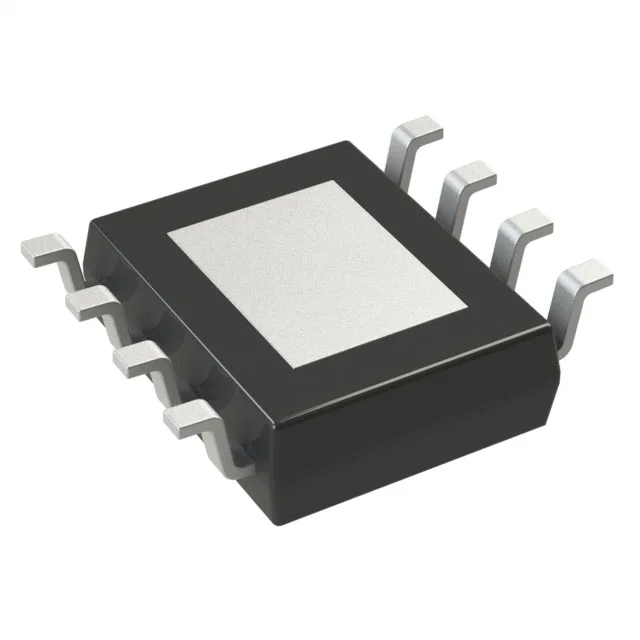
8V fixed rail — the LDO for an uncommon voltage
The ROHM BD80GA5MEFJ-LBH2 is a single-output, positive-voltage LDO regulator with a fixed 8V output and a 500mA current rating. Most LDOs in the 8-SOIC exposed-pad footprint land at 3.3V or 5V; this part fills the gap when the design calls for an 8V rail — common in industrial sensor supplies, relay coil drivers, or as a clean post-regulator from a 12V bus. Input voltage tolerance goes to 14V, so a 12V rail with 10% tolerance stays well inside the limit. The 1.2V maximum dropout at the full 500mA load means the input needs at least 9.2V to hold regulation; a 9V rail is marginal, a 12V rail gives comfortable headroom.
Dropout voltage — sizing the input rail
The 1.2V dropout max at 500mA is the number that sets the minimum input voltage. At lighter loads the dropout drops, but the max spec is what you budget for in worst-case. If the input rail is a 9V nominal supply that dips to 8.5V under load, this LDO will fall out of regulation before reaching the full 500mA. A 12V input rail is the safe choice; it leaves enough margin for the dropout and any transient dip on the bus.
Control features — sequencing and inrush
Enable and soft start are both on the pinout. The enable pin lets a supervisor or sequence controller hold the output off until the upstream rail is stable. The soft-start ramp limits the inrush current into the output capacitor, which matters when the LDO powers a load that would otherwise pull the input rail down during startup. No external soft-start capacitor needed — the ramp is internal.
Thermal reality in the 8-HTSOP-J package
At 500mA with a 12V input and 8V output, the LDO dissipates 2W (4V drop × 0.5A). For continuous 500mA operation, budget a 1-inch-square copper area on the PCB. At 300mA the thermal requirement relaxes, but the pad still needs a solid solder connection to the ground plane.
Protection and temperature range
Over-current, over-temperature, and short-circuit protection are built in — the LDO folds back or shuts down rather than letting the junction run away. Note that 105°C is the junction temperature limit, not the ambient; derate the output current based on the thermal resistance of the board design.