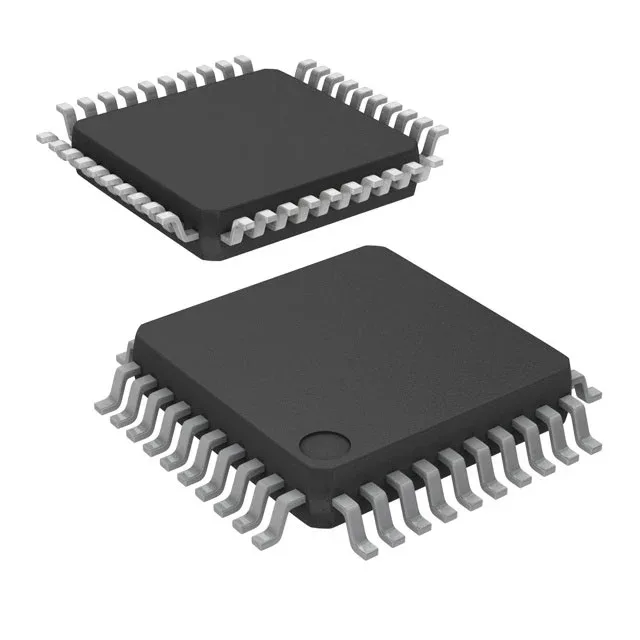
What the 32 MHz RL78 core and memory map mean for your BOM
The R7F100GBF3CFP#AA0 is a 16-bit RL78/G23 microcontroller running at 32 MHz — enough throughput to poll a dozen sensors over I²C or SPI, handle a UART command parser, and scan a capacitive-touch interface without needing a PLL or external oscillator. Its 96 KB flash (96K x 8) stores the application firmware, while the separate 8 KB EEPROM (8K x 8) holds calibration constants or boot parameters — you don't waste flash pages on non-volatile data that changes infrequently. The 12 KB RAM (12K x 8) leaves room for a modest RTOS heap and a few frame buffers; if your application needs more than that for data logging, the EEPROM or external serial memory over SPI is the next step.
Peripheral set and deployment context
This MCU integrates a capacitive touch sensing unit, LVD (low-voltage detect), POR, PWM, and WDT — the touch block is the standout: it lets a control panel with membrane buttons or proximity sliders run without a dedicated touch controller IC. The 8-channel 12-bit ADC (also configurable as 8- or 10-bit) and the 2-channel 8-bit DAC cover analog front-end tasks like reading a thermistor or driving a small speaker; the 27 I/O in a 32-pin package means only 5 pins are tied to power, ground, or the oscillator, so nearly every pin is usable as GPIO or a serial interface. With CSI, I²C, SPI, UART/USART, and LINbus on the connectivity list, this part fits into a sensor hub, a motor-control keypad, or an automotive-adjacent body module where LIN is the fieldbus.
ROHS3 compliant per the lifecycle record — no restricted substances and no exemption expiry to track for EU market shipments.