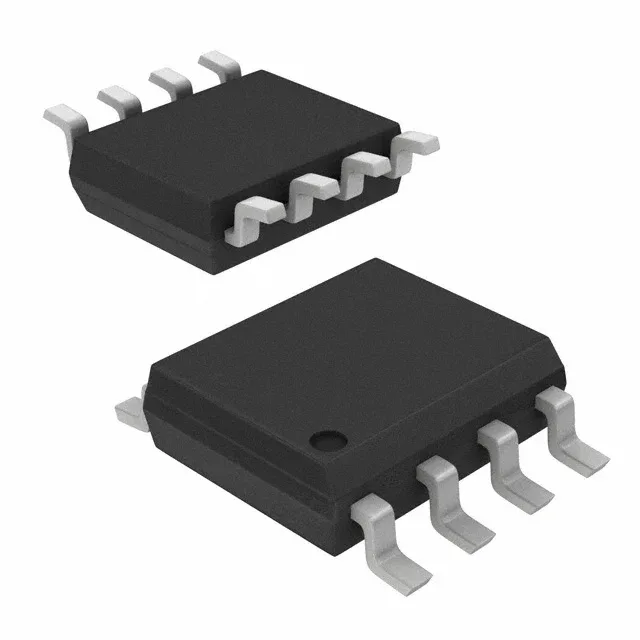
ICL7660CBAZ-T - Renesas Electronics America Inc
IC REG CHARG PUMP INV 45MA 8SOIC
Full Technical Specifications
14 Parameters| Parameter / Attribute | Specification / Value |
|---|---|
| Output type | Fixed |
| Mounting | Surface Mount |
| Voltage - input | 1.5V |
| Voltage - output (Min (Fixed)) | -Vin, 2Vin |
| Output current | 45mA |
| Frequency - switching | 10kHz |
| I/O channels | 1 |
| Operating temperature | 0°C~70°C(TA) |
| Package | Tape & Reel (TR); Cut Tape (CT) |
| Function | Ratiometric |
| Topology | Charge Pump |
| Case | 8-SOIC (0.154\", 3.90mm Width) |
| Output configuration | Positive or Negative |
| Synchronous rectifier | No |
Need Stock or a Drop-in Second-Source for ICL7660CBAZ-T?
Package: DIP-8 / SOIC-8 · Pin-compatible replacements with immediate Shenzhen spot stock
The ICL7660 is the two-capacitor negative-rail generator of analog benches: an 8-pin charge pump that turns +5 into -5 (or doubles a rail) with no inductor, at about 10 milliamps and 98-percent efficiency - the part behind op-amp negative supplies, RS-232-era negative rails and a thousand small split-supply designs. Its family is the substitution surface: MAX1044, LTC1044 and MAX660 share the pin map, and the fine print lives on PIN ONE, which is No-Connect on the ICL7660, a BOOST (6x frequency) on the MAX1044 and a frequency-control input on the MAX660 - so every socket is pin-compatible and every board that actually drives pin one is part-specific. The rest of the discipline is the LV pin and the caps.
Verified Pin-Compatible Replacements (3 verified alternatives)
The Boost-Pin Upgrade
Shenzhen Spot Stock (24-48h Dispatch)
The same pump with two conveniences: pin 1 becomes BOOST - tie it to the supply and the oscillator runs about six times faster (smaller caps, switching noise moved above the audio band) - and the LV pin tolerates being grounded at any supply voltage instead of the open-above-5V rule.
Guaranteed 1.5V to 10V operation without the output diode the original generations wanted.
The 100mA Upgrade in the Same Socket
Shenzhen Spot Stock (24-48h Dispatch)
The current-boosted member: up to 100 milliamps against the 10-milliamp class of the 7660 row, with pin 1 repurposed again - this time as a frequency-control input instead of the No-Connect.
Same inverting/doubling core; the output impedance at load is the headline difference.
The Linear-Tech Sibling
Shenzhen Spot Stock (24-48h Dispatch)
The same pinout and function from the Linear Technology line, with the LV rule stated the same way the row documents it: ground the pin below about 3.5 volts, leave it open above.
Same 1.5V-10V operating culture.
Buyer & Quality Checklist for Sourcing Alternatives
- The pin map is shared and pin 1 is the fine print: No-Connect (ICL7660/LTC1044), BOOST at 6x frequency (MAX1044), frequency control (MAX660). A floating socket accepts all; a driven pin 1 makes the parts different.
- The LV pin is a state, not a strap: ground it below about 3.5 volts and leave it OPEN above 5 volts on the ICL7660 (the MAX1044 tolerates grounded LV always). The violation shows as excess quiescent current or a pump that fights to start.
- The old-original generation wanted an output diode; the modern re-issues (meets A and S grade specs) do not. Keeping the series diode when replacing an original is the harmless retrofit - removing it without reading the new datasheet is the experiment.
- This is a 10-milliamp-class tool (0.5V drop at 10mA class): negative op-amp rails and bias supplies belong here; anything with real load current belongs to the 100mA member (MAX660) or an inductor-based switcher.
- Two external caps ARE the circuit: they set the output impedance and the ripple - matching their class when repairing matters as much as the silicon.
- External clock discipline: the OSC pin accepts a few hundred kilohertz of external drive - the design lever for noise placement; a repaired pump that howls in an audio path is a frequency decision.
- The row does not extend to the higher-voltage relatives by grading: the 20V-class members are separate selection decisions, not drop-in upgrades.
Frequently Asked Technical Questions
Q: Can a MAX1044 replace an ICL7660?
A: In a socket where pin 1 floats, yes - the pin map is shared and the BOOST function idles. The MAX1044 also guarantees 1.5-10V without the output diode the old originals wanted, and tolerates a grounded LV pin that the ICL7660 wants open above 5V.
Q: Why does my charge pump run hot or draw excess current?
A: Check the LV pin state against the supply first (open above 5V on the ICL7660), then the two capacitors and the load current against the 10-milliamp class of the part. The pump itself is usually reporting one of those three.
Q: What is the difference between ICL7660 and MAX660?
A: Current class: about 10 milliamps against up to 100 milliamps in the same socket, with pin 1 repurposed to a frequency-control input on the 660. Use it where the negative rail actually drives load current.