34 I/O through I²C — what the bus sees
The NXP PCAL6534EVJ is a 34-bit I²C GPIO expander from the Agile series. It adds 34 individually configurable I/O lines to a host controller over a two-wire bus running up to 1 MHz.
ROHS3 compliant.
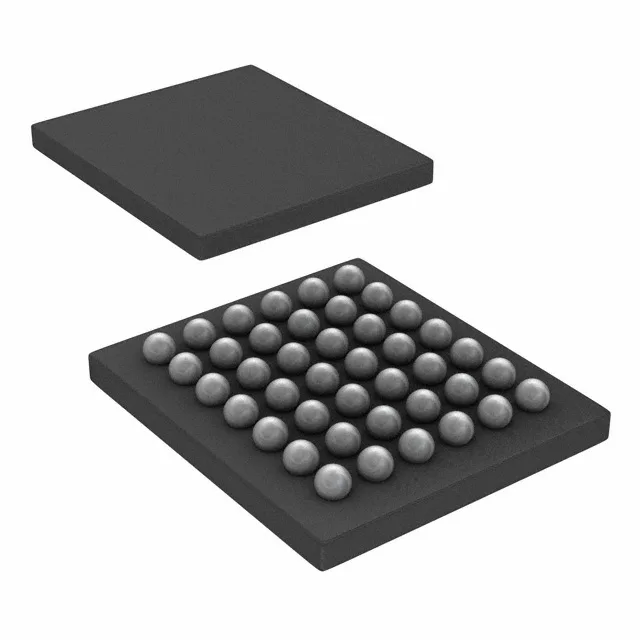
NXP PCAL6534EVJ Agile series GPIO expander, 34 I/O, I²C interface 1 MHz, 1.65V–5.5V supply, open-drain/push-pull outputs, interrupt output, -40°C to 85°C, 42-VFBGA (2.6x3) package.
| Parameter | Value |
|---|---|
| Series | Agile |
| Output type | Open Drain, Push-Pull |
| Mounting | Surface Mount |
| Supply voltage | 1.65V ~ 5.5V |
| Clock frequency | 1 MHz |
| Interface | I²C |
| Operating temperature | -40°C ~ 85°C |
| Package | Tape & Reel (TR); Cut Tape (CT) |
| Features | POR |
| Number of i (O) | 34 |
| Case | 42-VFBGA |
| Interrupt output | Yes |
The NXP PCAL6534EVJ is a 34-bit I²C GPIO expander from the Agile series. It adds 34 individually configurable I/O lines to a host controller over a two-wire bus running up to 1 MHz.
ROHS3 compliant.
Yes, the PCAL6534EVJ has an interrupt output (active-low, open-drain). It asserts when any input changes state, allowing the host to read the change over I²C without polling.
Yes. The supply range of 1.65 V to 5.5 V includes 3.3 V, so the part operates directly on a 3.3 V rail and its I/O levels match 3.3 V logic.
The PCAL6534EVJ provides 34 I/O lines, while the PCAL6524EVJ provides 24 I/O lines. Both share the same I²C interface, supply range, and VFBGA package family; the choice depends on how many additional GPIOs your design needs.