10 A RMS, 600 V — load-switching ceiling and voltage margin
The BTA310X-600D,127 is a logic-level sensitive-gate triac rated for 10 A RMS continuous on-state current and 600 V off-state blocking voltage — the 600 V rating provides margin on a 230 VAC line where peak voltage reaches 325 V, and covers 400 VAC line-to-line applications where the peak is 565 V. With a maximum gate trigger current of 5 mA and maximum gate trigger voltage of 1.5 V, this device triggers directly from a 3.3 V or 5 V MCU I/O pin or an optocoupler output without an intermediate driver transistor — the logic-level sensitivity eliminates the extra BOM line item.
85 A / 93 A surge — inrush survival for motor and lamp loads
The non-repetitive surge current rating of 85 A at 50 Hz and 93 A at 60 Hz means the triac can handle the cold-filament inrush of incandescent lamps or the starting surge of a small universal motor without failing — the half-cycle surge capability is the figure that governs fuse coordination, not the 10 A continuous rating. A maximum holding current of 10 mA ensures the device stays latched once triggered at low load currents — useful for loads that draw near the holding threshold at the end of their operating cycle, such as a relay coil or a small solenoid.
TO-220F isolated tab — no heatsink insulator needed
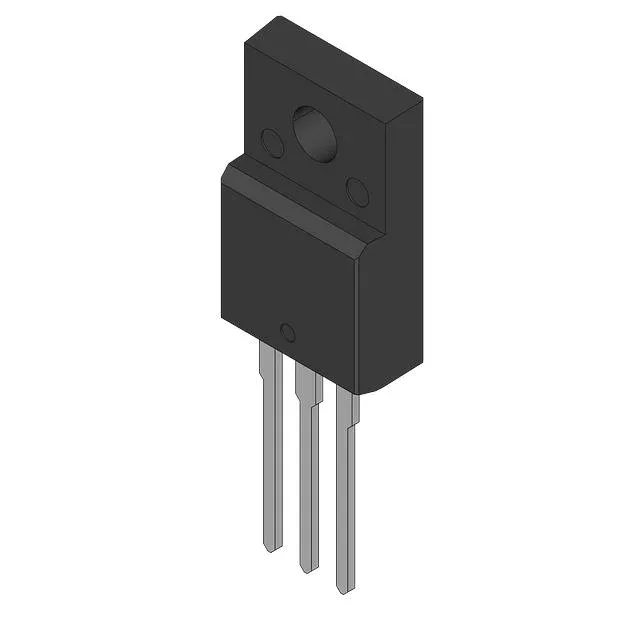
The TO-220-3 Full Pack (TO-220F) package has an isolated metal tab — the tab is electrically insulated from the die, so it can be bolted directly to a grounded heatsink or chassis without a separate mica or silicone-pad insulator. This saves assembly time and eliminates one thermal interface that would otherwise add 0.5–1 °C/W to the junction-to-ambient path. Through-hole mounting suits point-to-point wiring on perfboard or PCB layouts where the triac sits near a terminal block or relay socket — the TO-220F leadframe is the same 0.100-inch pitch as standard TO-220, so the existing PCB footprint carries over.
Active lifecycle — no end-of-life constraints for new designs
The part is suitable for new designs and ongoing production without a forced migration timeline. The 125 °C maximum junction temperature rating allows the triac to operate in enclosed or warm environments — a 10 A load in a 50 °C ambient with a modest heatsink stays well within the junction limit.