600 V off-state, 4 A RMS — what the ratings mean for the BOM
The BTA204X-600C,127 is a standard triac rated for 600 V off-state voltage and 4 A RMS on-state current. The 600 V rating gives comfortable margin for 230 VAC mains switching — nominal peak is 325 V, so the part handles line transients up to the 600 V ceiling without avalanche breakdown. The 4 A RMS continuous rating drives small AC loads: fans, solenoid valves, contactor coils, resistive heaters up to about 900 W at 230 VAC. The 27 A non-repetitive surge (60 Hz) covers the inrush from capacitive or incandescent loads during turn-on.
Gate drive and trigger thresholds
Maximum gate trigger current is 35 mA at a maximum gate trigger voltage of 1.5 V. This is a standard-gate triac — the drive requirement is higher than a sensitive-gate type, so confirm the gate driver can source 35 mA into the gate-cathode loop. A typical MCU GPIO cannot drive this directly; a transistor buffer or optocoupler with adequate current output is needed. Maximum hold current is 20 mA. Once the triac latches, the main current must stay above 20 mA to prevent commutation dropout at the zero-cross. For loads that draw near this threshold at the trough of the sine wave, add a dummy resistive load or select a lower-hold-current device.
Package and mounting — isolated tab simplifies heatsinking
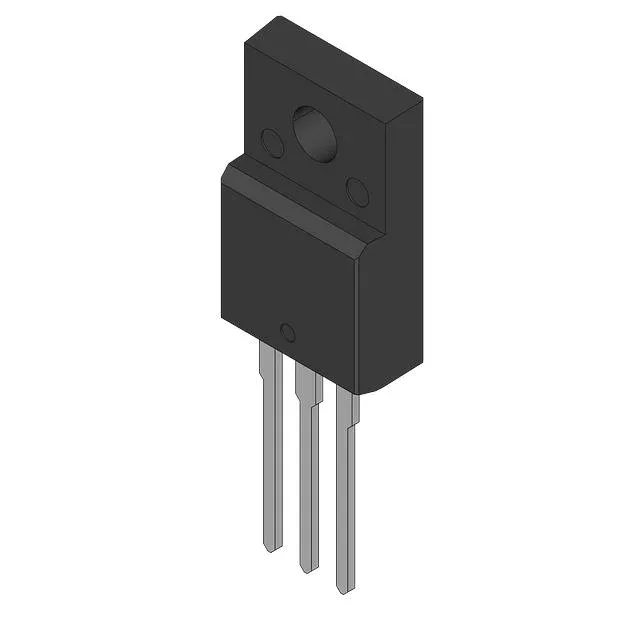
The TO-220-3 Full Pack (TO-220F) has an isolated tab — the metal back is electrically isolated from the die, so no mica washer or insulating pad is needed when bolting to a heatsink. This saves assembly time and reduces thermal resistance compared to a non-isolated TO-220 with an insulator. Through-hole mounting suits prototyping, low-volume builds, or retrofitting into existing PCB layouts that already have a TO-220 footprint. The Bulk packaging means parts are tube-packed, not reeled — fine for bench work but not pick-and-place without tube feeders.