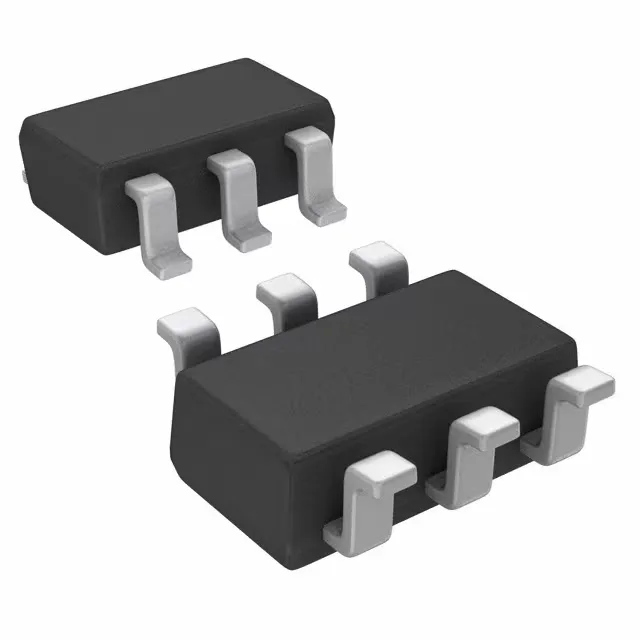
Microchip Technology MIC5320-SJYD6-TR — Power Management (PMIC / Gate Driver)

MIC5320-SJYD6-TR Microchip dual 150mA LDO, 2.5V/3.3V

MPNMIC5320-SJYD6-TR
End of Life

Microchip Technology MIC5320-SJYD6-TR dual 150mA LDO, fixed 2.5V/3.3V outputs, 0.1V dropout, 65dB PSRR, TSOT-23-6, Tape & Reel.

$1.1Ref. price · indicative, final on quote
PackagingSOT-23-6 Thin, TSOT-23-6
RoHSROHS3 Compliant
Independent supplier — new & surplus stockAuthenticity-screened · ESD-safe packingListing updated Aug 2026

Specifications

MIC5320-SJYD6-TR specifications
ParameterValue
Output typeFixed
MountingSurface Mount
Voltage - input5.5V
Voltage dropout0.1V @ 150mA, 0.1V @ 150mA
Voltage - output (Min (Fixed))2.5V, 3.3V
Output current150mA, 150mA
Current - supply190 µA
Current - quiescent120 µA
Operating temperature-40°C ~ 125°C
PSRR65dB ~ 45dB (1kHz ~ 20kHz)
PackageTape & Reel (TR); Cut Tape (CT)
CaseSOT-23-6 Thin, TSOT-23-6
Control featuresEnable
Protection featuresOver Current, Over Temperature
Number of regulators2
Output configurationPositive

Product details

Dual-rail LDO in a single TSOT-23-6

The MIC5320-SJYD6-TR: That means one part powers both the analog front-end and the digital core on a mixed-signal board, saving the second regulator footprint and the extra ceramic caps on its output. Dropout is 0.1 V max at 150 mA per channel — the headroom between the input rail and the 2.5 V output must stay above 100 mV across the full load range, or the output falls out of regulation. For a 3.3 V input feeding the 2.5 V rail, that leaves 0.7 V of margin; plenty until the input dips below 2.6 V.

PSRR roll-off and where it matters

PSRR measures 65 dB at 1 kHz and drops to 45 dB at 20 kHz — the crossover frequency where upstream switching noise from a buck converter starts passing through. If the input rail carries 500 kHz ripple, the LDO attenuates it by maybe 20 dB at best; a pi filter ahead of the LDO is worth the two ceramic caps and a ferrite bead. Quiescent current is 120 µA per channel, 190 µA max supply current for both rails combined. For an always-on sensor node drawing 50 µA from the 3.3 V rail, the LDO's own consumption dominates the sleep budget — a load-switch to cut the LDO when the system sleeps doubles battery life.

Industrial temperature and protection

A motor-drive control board sitting at 85°C ambient still has 40°C of margin before the thermal shutdown kicks in. Over-current and over-temperature protection are built in; the LDO folds back current on a shorted output and recovers when the junction cools.

Frequently asked questions

What is the PSRR of the MIC5320-SJYD6-TR at audio frequencies?

PSRR is 65 dB at 1 kHz, dropping to 45 dB at 20 kHz. This means the LDO rejects 65 dB of 1 kHz ripple — about 99.94% — but only 45 dB (99.4%) at 20 kHz. For a sensitive audio codec powered from a switching pre-regulator, the 20 kHz rejection may not be enough; a second-stage LC filter ahead of the LDO cleans up the high-frequency hash.