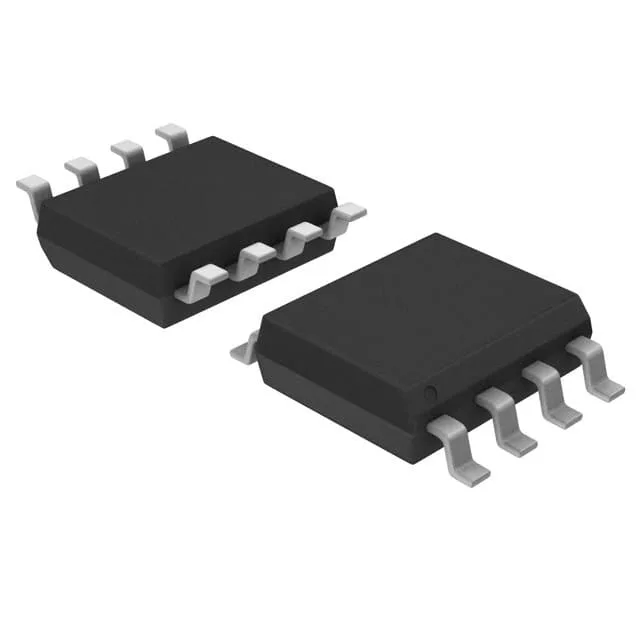
Microchip Technology MIC4801YM-TR — Discrete Semiconductors

MIC4801YM-TR Linear LED Driver, 600 mA, PWM Dimming, 8-SOIC

MPNMIC4801YM-TR
End of Life

Microchip MIC4801YM-TR linear LED driver, single output 600 mA, PWM dimming, 3 V to 5.5 V supply, 8-SOIC package, -40°C to 125°C operating temperature.

$1.03Ref. price · indicative, final on quote
Packaging8-SOIC (0.154", 3.90mm Width)
RoHSROHS3 Compliant
Independent supplier — new & surplus stockAuthenticity-screened · ESD-safe packingListing updated Aug 2026

Specifications

MIC4801YM-TR specifications
ParameterValue
TypeLinear
MountingSurface Mount
Voltage5.5V
Current - output (Channel)600mA
I/O channels1
Operating temperature-40°C ~ 125°C (TJ)
DimmingPWM
PackageTape & Reel (TR); Cut Tape (CT)
ApplicationsLighting
Case8-SOIC (0.154\", 3.90mm Width)
Internal switchYes

Product details

The MIC4801YM-TR: This is a linear LED driver, not a switching regulator — it regulates current by dissipating excess voltage as heat, so the 600 mA rating is the continuous output the part can sink. The PWM dimming input lets a microcontroller or PWM source control brightness by modulating the on-time, which is the standard approach for architectural and signage lighting where colour temperature must stay constant across dim levels.

Supply range is 3 V to 5.5 V.

The single output and internal switch keep the external BOM to a minimum — just the driver IC, a sense resistor, and the LED load. No external MOSFET needed.

Frequently asked questions

What is the maximum output current of MIC4801YM-TR?

The MIC4801YM-TR delivers 600 mA per channel, single output. That is the continuous current the internal switch can sink — sufficient for driving a single high-power LED or multiple lower-current LEDs in series, limited by the supply voltage headroom.

Can I use MIC4801YM-TR for RGB LED applications?

The MIC4801YM-TR has a single output, so it drives one LED channel. For RGB you would need three devices — one per colour channel — each controlled by a separate PWM signal. The PWM dimming input makes it straightforward to synchronise colour mixing from a microcontroller.