±3°C local/remote temp sensor with I²C — what the accuracy spec means for your thermal design
The MIC281-3BM6 is a low-cost digital temperature sensor from Microchip that monitors both its own die temperature and an external diode-connected transistor (typically a 2N3904 or substrate PNP). Accuracy is rated ±3°C across the full operating range, widening to ±5°C at the extremes. For a fan-control loop or over-temperature alarm, ±3°C is adequate headroom. For a precision calibration or a tight thermal shutdown threshold, that same ±3°C window may force a guard-band that cuts into the usable temperature envelope.
Supply rails and bus — 3.3 V only, I²C/SMBus
The I²C/SMBus output lets you hang the sensor on a shared bus with other peripherals; the shutdown mode feature (pin-controlled or register-controlled, depending on the variant) lets you cut the sensor's power consumption when the system enters a low-power sleep state.
SOT-23-6 footprint and temperature range
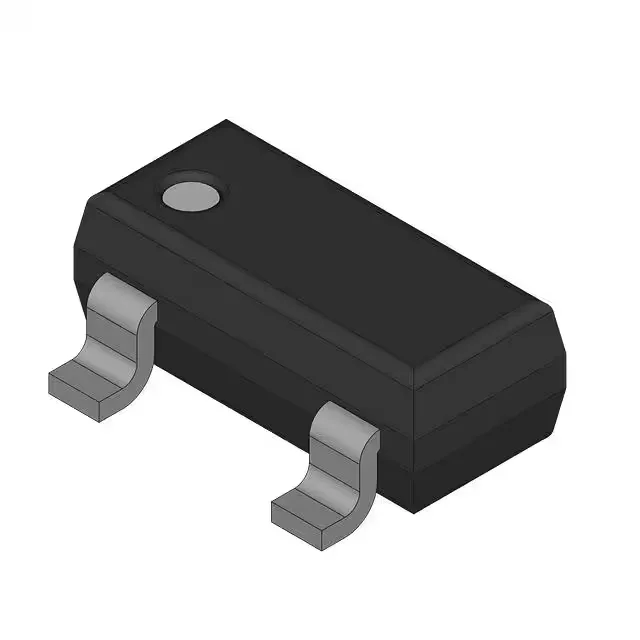
Housed in a 6-pin SOT-23 surface-mount package, this sensor fits on tight PCB real estate. The extended range also covers the full automotive AEC-Q100 Grade 1 temperature band, though this part carries no explicit AEC-Q qualification in the record.
RoHS non-compliance — a sourcing constraint
The MIC281-3BM6 is listed as RoHS non-compliant. This is not a paperwork gap — the part contains lead in the solder finish or die attach above the RoHS exemption thresholds. For any design destined for the EU market or for OEMs with corporate RoHS mandates, this part cannot be used. It remains viable for military, aerospace, and certain industrial applications where RoHS exemptions are accepted or where the assembly process uses leaded solder. The lifecycle status is Active, so Microchip continues to manufacture it — there is no LTB or obsolescence pressure.