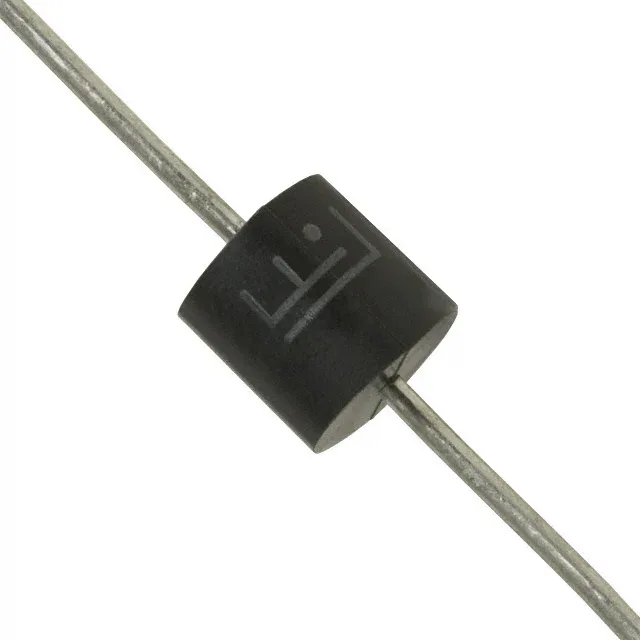
The 5KP250A-B: At that pulse the clamping ceiling sits at 425 V maximum, and the part conducts 12 A through the surge. The −55 °C to 175 °C junction temperature range puts this squarely in equipment that sees hot ambient or extended dissipation stress, like outdoor cabinet power or multi-cell battery strings that run above room temperature.
Standoff, breakdown, clamping — the three voltages
Reverse standoff is the voltage the TVS sees idling — 250 V typ means it sits off until a transient pushes it into avalanche. Breakdown minimum of 277 V is where it begins conducting, and the 425 V clamping maximum is the peak voltage the protected load sees at the rated 12 A peak pulse current. For a 250 V rail, a 277 V minimum breakdown gives roughly 27 V of headroom above standoff before the device snaps into conduction — enough that normal line transients below that threshold do not cause unnecessary wear on the clamping element.
P600 axial package and through-hole assembly
The P600 axial body mounts in a hole pattern compatible with standard TVS diode clips and standoff lead-forming jigs. The through-hole leadform handles board flex and thermal cycling better than a SMD part in high-vibration environments — the leads absorb mismatch between the PCB and the package rather than loading a solder joint. Bulk packaging aligns with production runs that use loose-part feeding or magazine strip loading rather than tape-and-reel.