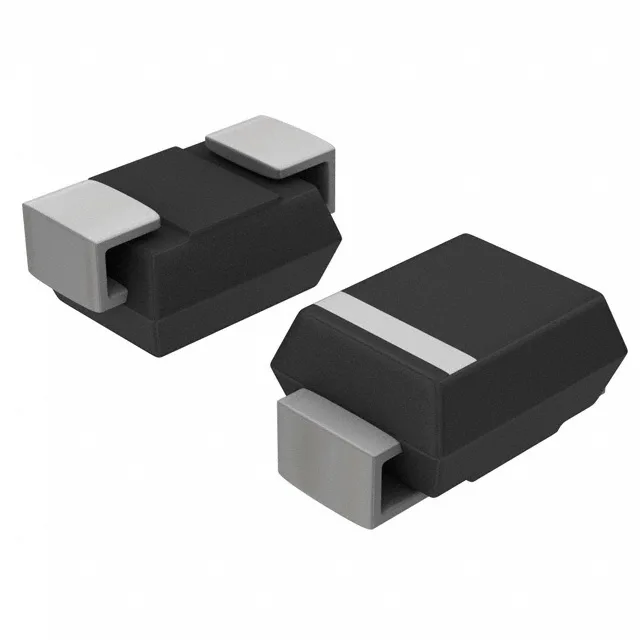
The 5.0SMDJ10CASHRAT7: At that pulse width the device absorbs the transient energy and clamps the voltage before the surge propagates past the protected node. The reverse standoff voltage of 10 V sets the continuous working voltage the diode can hold off without conduction; the breakdown minimum of 11.1 V is where the clamping path begins. Once triggered, the maximum clamping voltage is 17 V at the rated peak pulse current of 294.1 A — so whatever the upstream surge injects, the downstream circuit sees 17 V or less.
Junction temperature and telecom environment
The specified junction temperature range is -65 °C to 150 °C. For outdoor telecom cabinet equipment this matters: a protected port on a base-station power feed can swing well below freezing in cold climates and run hot when the enclosure is sun-loaded. The 150 °C Tj ceiling gives meaningful margin against the derating curves in the Littelfuse 5.0SMDJ-S datasheet. Telecom is the listed application — specifically secondary protection on data or power ports where the primary fusing or common-mode suppression has already handled the bulk energy. The 10 V standoff puts this in the 24 V telecom bus range: DSL, T1/, or PoE line cards where the supply rail or signal pair needs a defined clamping ceiling.
Active status and sourcing posture
No official successor or second-source cross-reference appears in the 5.0SMDJ family data for this standoff voltage.