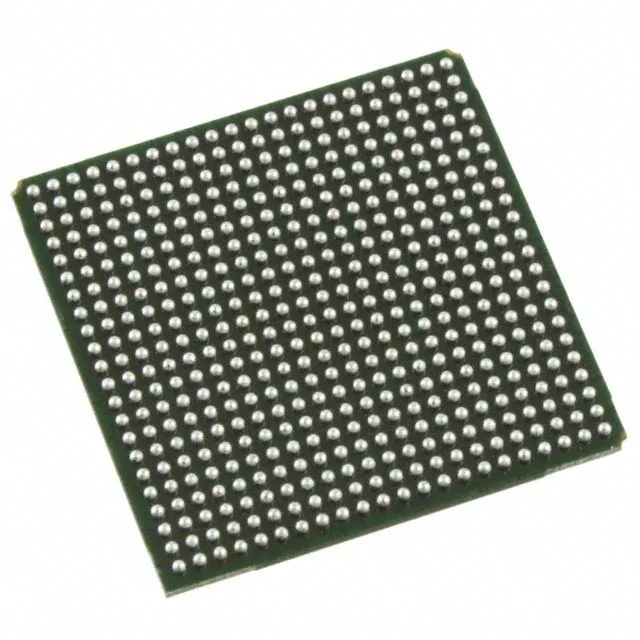
Lattice Semiconductor LFE2-20E-6FN484I — FPGA / CPLD & Programmable Logic

LFE2-20E-6FN484I Lattice ECP2, 21K LEs, 331 I/O

MPNLFE2-20E-6FN484I
Active

Lattice Semiconductor ECP2 series FPGA, order code LFE2-20E-6FN484I, 21,000 logic elements, 331 I/O, 282,624 total RAM bits, 1.14 V supply, -40°C to 100°C junction temperature, 484-ball FBGA tray.

$80.21Ref. price · indicative, final on quote
Independent supplier — new & surplus stockAuthenticity-screened · ESD-safe packingListing updated Aug 2026

Specifications

LFE2-20E-6FN484I specifications
ParameterValue
SeriesECP2
MountingSurface Mount
Operating temperature high-40°C to 100°C (TJ)
Package_typeTray
Number of i (O)331
Total ram bits282624
StatusActive
Supply voltage1.14
Number of labs (Clbs)2625
Number of logic elements (Cells)21000

Product details

Logic density and I/O for mid-density co-processing

The LFE2-20E-6FN484I packs 21,000 logic elements and 331 user I/O in a 484-ball FBGA — enough fabric to handle a modest soft-core processor, a video scaler, or a multi-channel serial bridge without bumping to a larger device.

The core supply is 1.14 V — a single 1.2 V rail with a small LDO drop is typical; the 1.14 V minimum means the regulator must hold regulation under load transients.

On-chip block RAM and package format

282,624 total RAM bits are distributed as ECP2 block RAMs — enough for a 256×32 FIFO, a small lookup table, or a coefficient store for a digital filter. The 484-ball FBGA is a 1.0 mm pitch package; the inner rows need micro-vias or blind vias on a 6+ layer board, so budget PCB stack-up accordingly. Supplied in tray.

Frequently asked questions

What is the difference between LFE2-20E-6FN484I and LFE2-20E-5FN484I?

The -6 speed grade is the faster option in the ECP2 family for the LFE2-20 density. The -5 grade has relaxed timing — expect lower maximum clock frequency and longer propagation delays. Both are pin-compatible and share the same 484-ball FBGA footprint, so a board designed for one can accept the other with a timing re-analysis.