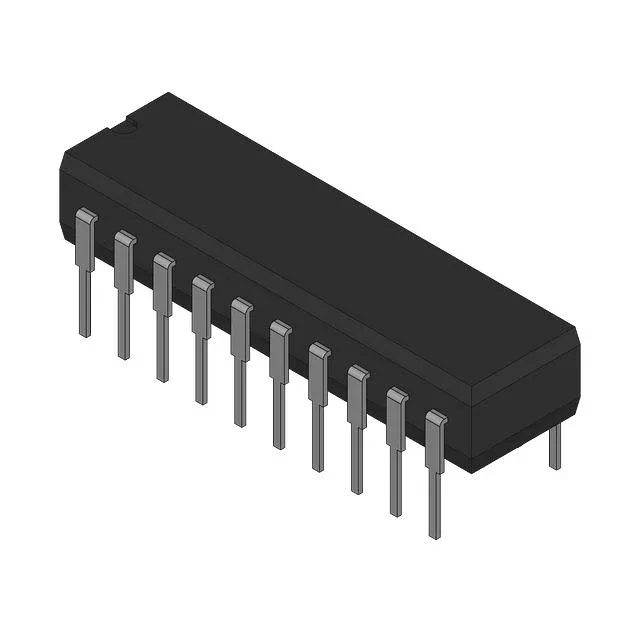
15 ns speed grade — what it means for the timing budget
The GAL16V8ZD-15QP: The 15 ns propagation delay (pin-to-pin) sets the maximum clock rate in registered mode — for a 16V8 at 15 ns, the toggle rate ceiling is roughly 50–60 MHz depending on the combinatorial feedback path. That is fast enough for glue logic, address decoding, and state machines in legacy 5 V bus systems, but not for high-speed synchronous interfaces above 80 MHz. Eight macrocells, each configurable as registered or combinatorial output, match the standard 20-pin PAL/GAL footprint. The EE PLD technology means the device is electrically erasable and reprogrammable — no UV eraser required, unlike older one-time-programmable PALs.
5 V supply — legacy bus compatibility
If your board already carries a 5 V rail for other legacy logic, this drops straight in. Board layout is fixed for this footprint — no SMT reflow profile needed.
Active production — but watch the RoHS flag
RoHS non-compliant (lead-bearing solder finish). This is acceptable for military, aerospace, and some industrial applications with RoHS exemptions, but it blocks EU-compliant consumer or medical builds.