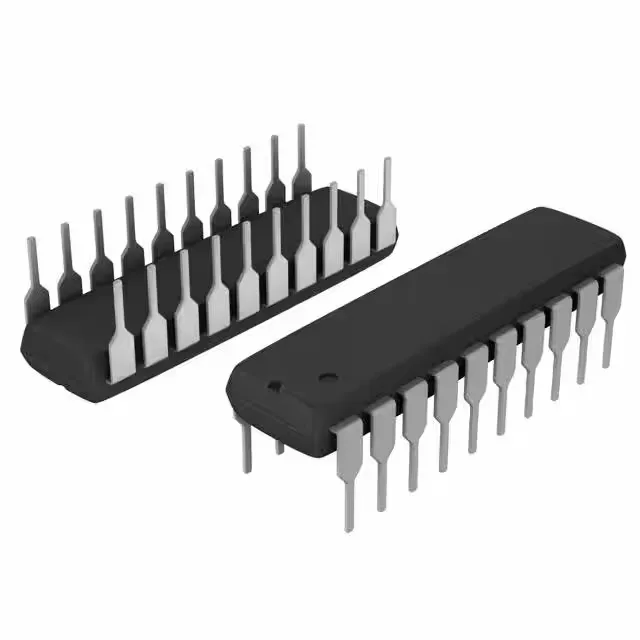
10 ns propagation delay — what it means for timing closure
The GAL16V8D-10QPN: The 10 ns max tpd(1) sets the combinatorial path budget from input to registered output. In a 5 V system clocked at 50 MHz (20 ns period), this delay consumes half the cycle — the remaining margin must cover routing, clock skew, and output loading. For a 33 MHz bus (30 ns period), the same 10 ns delay leaves 20 ns for the rest of the path, which is comfortable for most glue-logic applications. Eight macrocells, each configurable as registered or combinatorial, give 16 product-term inputs per output. This density suits address decoding, state-machine sequencing, or bus-interface translation where a handful of PAL/GAL equations replace discrete 74-series logic.
Lattice Semiconductor has marked the GAL16V8D-10QPN as obsolete. No official successor or pin-compatible replacement is recorded from the original manufacturer.
A 5 V rail that droops below 4.75 V during brownout or ripple will cause undefined logic states.