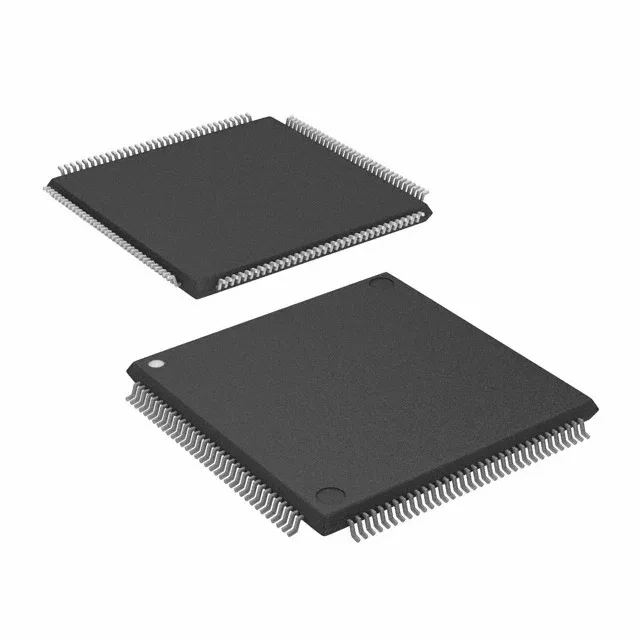
440 macrocells, 116 I/O — where the logic lands
The EPM570T144C3: That macrocell count puts it in the middle of the MAX II family — enough for glue logic, address decoding, or a small state machine without reaching for a bigger device. Propagation delay is 5.4 ns max (tpd1), which means combinatorial paths settle within one 185 MHz clock period at the pin. For a board that already runs a 100 MHz bus, this part keeps combinatorial decode off the critical path.
Supply rails and temperature — what the ratings mean for fit
Operating temperature is 0°C to 85°C junction — the commercial grade. It is at home in an indoor control cabinet or telecom shelter, but not in an engine bay or freezer. The 144-TQFP body is 20×20 mm with 0.5 mm pitch; a two-layer board can fan out the inner rows with a via-in-pad if the layout is tight. In-system programmable via JTAG — no socket, no UV eraser. The part programs in-circuit with a standard 4-pin header, which means a firmware engineer can update the logic on a production board without removing it. The non-volatile configuration holds on power-down.