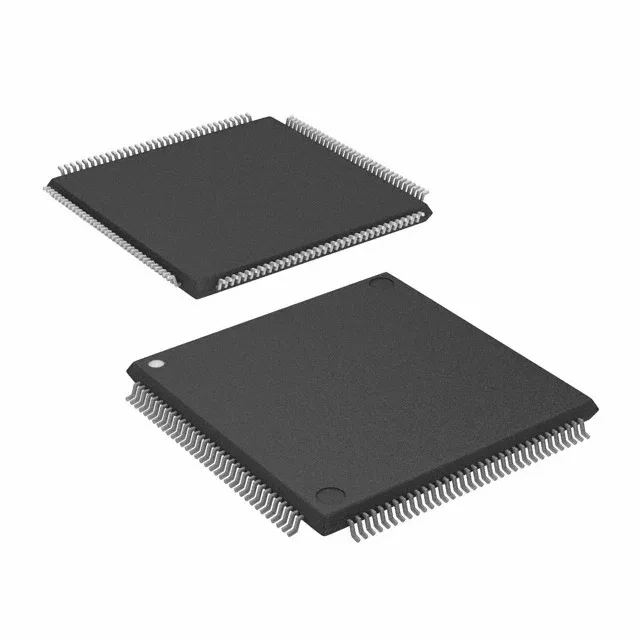
Intel EPM570GT144C5N — FPGA / CPLD & Programmable Logic

EPM570GT144C5N CPLD, MAX II, 440 Macrocells, 5.4 ns

MPNEPM570GT144C5N
Active

Intel/Altera MAX® II CPLD, EPM570GT144C5N, 570 logic elements, 440 macrocells, 116 I/O, 5.4 ns pin-to-pin delay, 1.71 V–1.89 V core, 0°C–85°C, 144-TQFP (20x20 mm), Tray.

$300.0000Ref. price · indicative, final on quote
Independent supplier — new & surplus stockAuthenticity-screened · ESD-safe packingListing updated Aug 2026

Specifications

EPM570GT144C5N specifications
ParameterValue
SeriesMAX® II
MountingSurface Mount
Programmable typeIn System Programmable
Voltage supply - internal1.71V ~ 1.89V
Operating temperature0°C~85°C(TJ)
PackageTray
Number of i (O)116
Case144-LQFP
Number of macrocells440
Delay time tpd(1) max5.4 ns
Number of logic elements (Blocks)570

Product details

The 5.4 ns max propagation delay is the time from any input pin through the logic array to any output pin.

In-system programmable — no socket needed

The EPM570GT144C5N is in-system programmable via JTAG. No separate programmer socket is required on the board — just a 4-pin header (TMS, TCK, TDI, TDO) plus VCC and GND. The MAX II family supports both SRAM-based configuration and non-volatile storage, so the design holds its logic on power-up without an external configuration device. Programming is done through Altera's Quartus II software with a USB-Blaster or compatible JTAG cable.

Frequently asked questions

How to program EPM570GT144C5N?

In-system programmable via JTAG using Altera Quartus II software and a USB-Blaster or compatible JTAG cable. No external programmer needed — just a 4-pin JTAG header on the board.

What is the difference between EPM570GT144C5N and EPM570GT144C4N?

The C4 suffix indicates a faster speed grade than the C5. The C5 has a 5.4 ns tpd; the C4 is typically 4.5 ns or lower. All other specs — logic density, I/O count, package, voltage — are identical.