The Intel EPM570GT100C5N is a MAX® II family CPLD with 570 logic elements and 440 macrocells, packaged in a 100-TQFP (14x14 mm) footprint. It operates from a 1.71 V to 1.89 V core supply and is in-system programmable via JTAG. With 76 user I/O and a 5.4 ns pin-to-pin delay, it handles board-level glue logic, address decoding, and I/O expansion in industrial control, telecom, and consumer equipment where the ambient temperature stays within 0°C to 85°C.
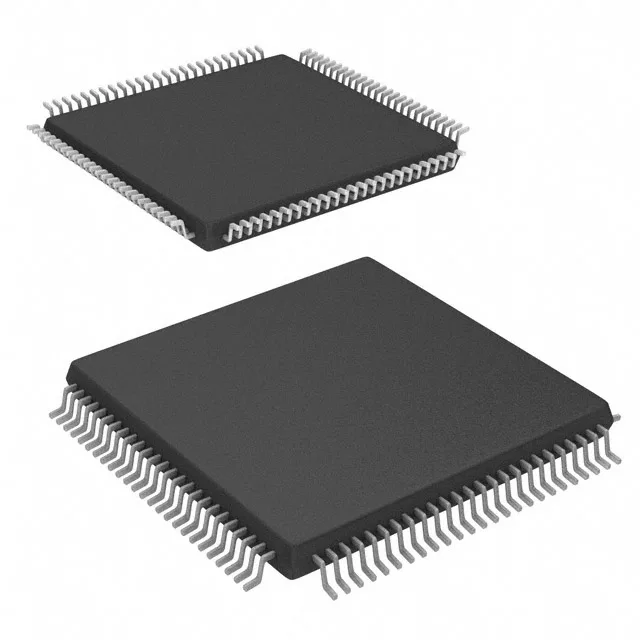
Intel EPM570GT100C5N CPLD, MAX II, 570 LE, 5.4 ns, 100-TQFP
MPNEPM570GT100C5N
Active
Intel MAX® II CPLD, EPM570GT100C5N, 570 logic elements, 440 macrocells, 76 I/O, 5.4 ns pin-to-pin delay, 1.71V–1.89V core, 100-TQFP (14x14 mm), 0°C to 85°C.
$29.9000Ref. price · indicative, final on quote
Independent supplier — new & surplus stockAuthenticity-screened · ESD-safe packingListing updated Aug 2026
Specifications
| Parameter | Value |
|---|---|
| Series | MAX® II |
| Mounting | Surface Mount |
| Programmable type | In System Programmable |
| Voltage supply - internal | 1.71V ~ 1.89V |
| Operating temperature | 0°C ~ 85°C (TJ) |
| Package | Tray |
| Number of i (O) | 76 |
| Case | 100-TQFP |
| Number of macrocells | 440 |
| Delay time tpd(1) max | 5.4 ns |
| Number of logic elements (Blocks) | 570 |
Product details
Frequently asked questions
Is EPM570GT100C5N obsolete or active?
Active. The product status is Active, meaning Intel continues to manufacture it with no end-of-life notice.
What is the difference between EPM570GT100C5N and EPM570T100C5N?
The 'G' in EPM570GT100C5N indicates a lead-free (RoHS-compliant) finish. The EPM570T100C5N is the tin-lead version. Electrically and functionally identical; the choice is assembly process compatibility.
Can EPM570GT100C5N be programmed with Quartus?
Yes. Intel Quartus Prime (Standard or Lite) supports the MAX II family. Program via JTAG using a USB-Blaster or compatible download cable.