Logic density and propagation delay — the fit decision
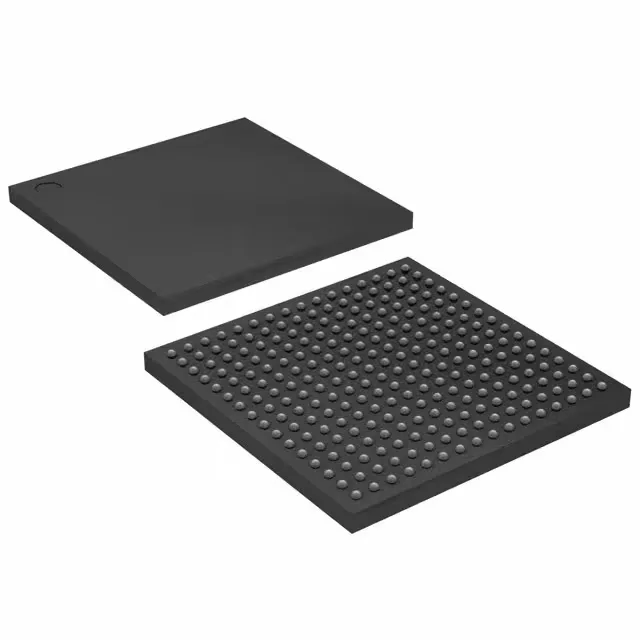
The EPM570GF256C4N is a MAX® II family CPLD from Intel, packing 440 macrocells and 570 logic elements into a 256-ball FBGA footprint (17x17 mm). The 5.4 ns maximum propagation delay (tpd1) sets the combinational logic ceiling — any path through the CPLD must stay under this budget for the clock period, or the design needs pipelining or a faster part. The 160 user I/O break out to the BGA balls; the 0.8 mm pitch on the 17x17 array demands a 4-layer PCB for fan-out on the inner rows.
Core supply is 1.71 V to 1.89 V — a 1.8 V rail with ±5 % tolerance keeps the CPLD inside the operating window. The commercial temperature grade (0 °C to 85 °C junction) covers most indoor and telecom enclosure environments, but not extended industrial or automotive. Decoupling should follow the MAX II hardware checklist: one 0.1 µF ceramic per VCC pair, plus a 10 µF bulk cap per supply plane.
In-system programming and JTAG support
The device is In System Programmable (ISP) via the JTAG interface — the 4-pin TCK/TMS/TDI/TDO chain connects directly to a standard 10-pin JTAG header. No external programming voltage is needed; the core supply powers the programming logic. The MAX II family supports real-time ISP without a dedicated configuration device, so the same JTAG chain can program the CPLD and any downstream FPGA in the same scan path.