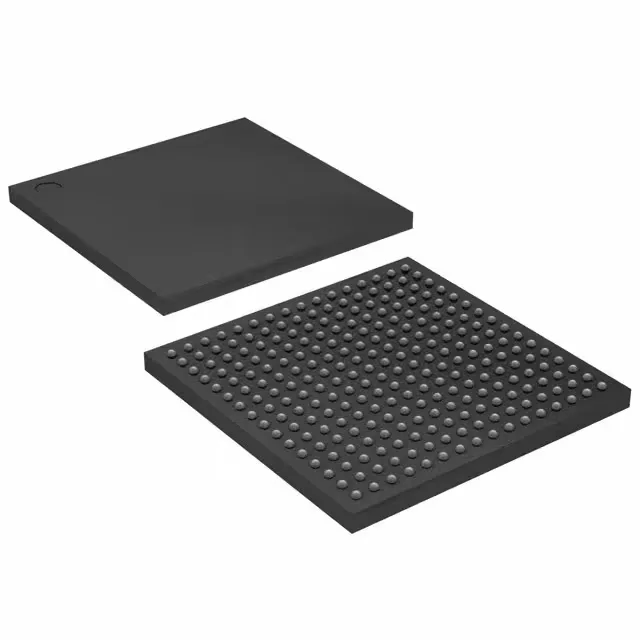
Intel EPM570F256C3N — FPGA / CPLD & Programmable Logic

Intel EPM570F256C3N MAX II CPLD, 440 Macrocells, 5.4 ns

MPNEPM570F256C3N
Active

Intel MAX® II CPLD, EPM570F256C3N, 440 macrocells, 570 logic elements, 160 I/O, 5.4 ns tpd, 2.5V/3.3V, 256-FBGA (17x17), 0°C to 85°C.

$69.0000Ref. price · indicative, final on quote
Sourced new & surplus through independent channelsAuthenticity-screened · ESD-safe packingListing updated Aug 2026

Specifications

EPM570F256C3N specifications
ParameterValue
SeriesMAX® II
MountingSurface Mount
Programmable typeIn System Programmable
Voltage supply - internal2.5V, 3.3V
Operating temperature0°C~85°C(TJ)
PackageTray
Number of i (O)160
Case256-BGA
Number of macrocells440
Delay time tpd(1) max5.4 ns
Number of logic elements (Blocks)570

Product details

The Intel EPM570F256C3N is a MAX® II complex programmable logic device (CPLD) built on a look-up-table (LUT) architecture with 570 logic elements and 440 macrocells. It is in-system programmable via JTAG, so no external programmer is needed for board-level updates. The 256-ball FBGA (17x17 mm) package brings 160 user I/O to the board — enough for glue-logic consolidation, address decoding, or bus bridging in a mid-density design.

5.4 ns propagation delay — timing closure in context

The C3N speed grade specifies a pin-to-pin combinational delay (tpd) of 5.4 ns maximum.

What the 160 I/O and 256-BGA mean for the board

The 256-ball FBGA (17x17 mm) with 160 user I/O is a fine-pitch BGA — expect at least four PCB layers for fanout, with microvias or blind vias if routing density is high. Plan for a JTAG header (TCK, TMS, TDI, TDO) on the board for in-system programming; no external flash is needed because the MAX II configuration is stored in on-chip flash.

Frequently asked questions

What are the differences between EPM570F256C3N and other speed grades like C4N or C5N?

The C3N speed grade specifies a maximum pin-to-pin delay (tpd) of 5.4 ns. Higher-numbered speed grades (C4N, C5N) have slower tpd values — for example, the C5N grade is typically 7.5 ns. The C3N is the fastest standard speed grade in the MAX II family for this density.

Is EPM570F256C3N drop-in compatible with EPM570F256C4N?

Yes, the EPM570F256C3N and EPM570F256C4N share the same base product number (EPM570), same package (256-FBGA), and same pinout — they differ only in speed grade. The C3N is faster (5.4 ns tpd) than the C4N.

What are the programming requirements for EPM570F256C3N?

The EPM570F256C3N is in-system programmable via a standard JTAG interface (TCK, TMS, TDI, TDO). No external programmer or configuration memory is required; the device stores its configuration in on-chip flash.

What is EPM570F256C3N's listed series?

The EPM570F256C3N belongs to the MAX® II series of CPLDs from Intel.