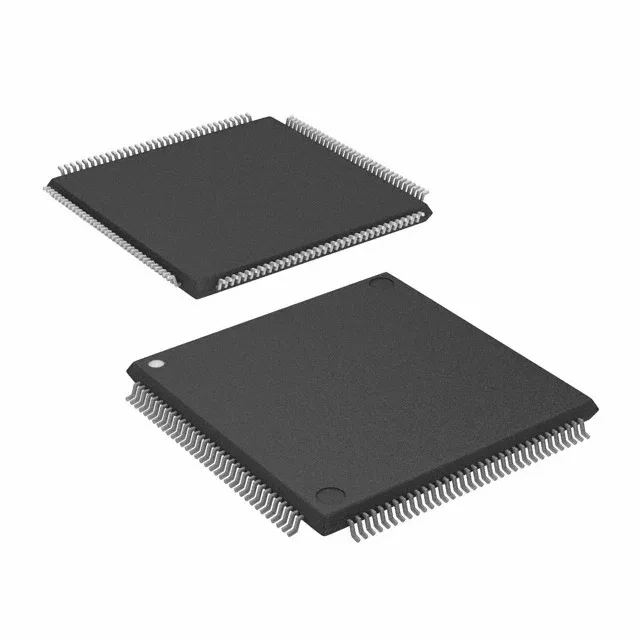
Intel EPM1270GT144C5N — FPGA / CPLD & Programmable Logic

Intel EPM1270GT144C5N MAX II CPLD, 980 macrocells, 6.2 ns

MPNEPM1270GT144C5N
Active

Intel MAX® II CPLD, EPM1270GT144C5N, 144-LQFP, 980 macrocells, 116 I/O, 1.8V core, 6.2 ns propagation delay, 0°C to 85°C.

$63.0280Ref. price · indicative, final on quote
Sourced new & surplus through independent channelsAuthenticity-screened · ESD-safe packingListing updated Aug 2026

Specifications

EPM1270GT144C5N specifications
ParameterValue
SeriesMAX® II
MountingSurface Mount
Programmable typeIn System Programmable
Voltage supply - internal1.71V ~ 1.89V
Operating temperature0°C~85°C(TJ)
PackageTray
Number of i (O)116
Case144-LQFP
Number of macrocells980
Delay time tpd(1) max6.2 ns
Number of logic elements (Blocks)1270

Product details

MAX II CPLD — 980 macrocells in a 144-LQFP

The Intel EPM1270GT144C5N is a MAX® II family CPLD offering 980 macrocells and 1270 logic elements in a 144-LQFP package (20x20 mm). It provides 116 user I/O, operates from a 1.71 V to 1.89 V core supply, and is in-system programmable via JTAG. The 6.2 ns propagation delay (tpd1 max) suits it for medium-density glue logic, address decoding, and control-path consolidation on boards that need instant-on, non-volatile logic without an external configuration memory.

The EPM1270GT144C5N is end-of-life. Intel has discontinued this package variant.

Frequently asked questions

Is EPM1270GT144C5N obsolete?

Yes, the EPM1270GT144C5N is end-of-life (EOL). Intel has discontinued this package variant. It is available through independent distribution on a last-time-buy or surplus basis — request a quote for current availability and pricing.

What is the difference between EPM1270GT144C5N and EPM1270F256C5N?

The primary difference is the package: the EPM1270GT144C5N is in a 144-LQFP (20x20 mm, 116 I/O), while the EPM1270F256C5N uses a 256-FBGA package with more I/O. Both share the same 980-macrocell core, 1.8 V supply, and 6.2 ns tpd. The BGA variant is suited for high-density boards where the LQFP footprint is too large.