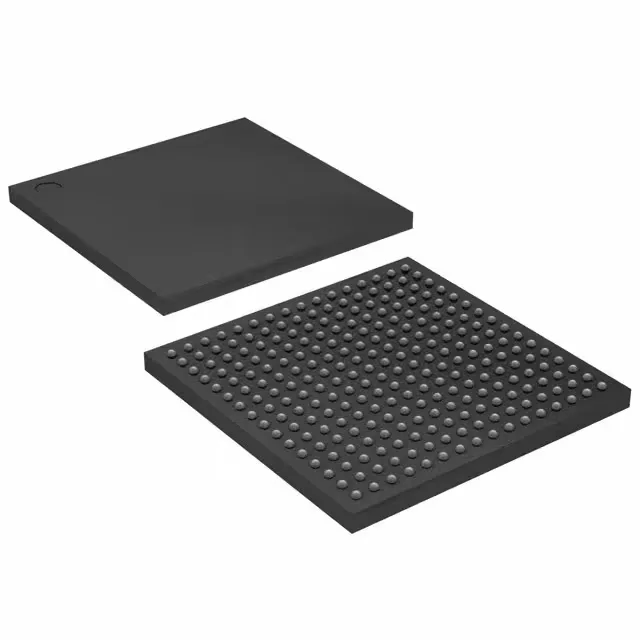
Intel EPM1270F256C5N — FPGA / CPLD & Programmable Logic

Intel EPM1270F256C5N MAX II CPLD, 980 macrocells, 6.2 ns

MPNEPM1270F256C5N
Active

Intel MAX® II CPLD, EPM1270F256C5N, 980 macrocells, 212 I/O, 6.2 ns tpd1, 256-FBGA (17x17 mm), 2.5V/3.3V, 0°C~85°C, Tray.

$54.6000Ref. price · indicative, final on quote
Sourced new & surplus through independent channelsAuthenticity-screened · ESD-safe packingListing updated Aug 2026

Specifications

EPM1270F256C5N specifications
ParameterValue
SeriesMAX® II
MountingSurface Mount
Programmable typeIn System Programmable
Voltage supply - internal2.5V, 3.3V
Operating temperature0°C~85°C(TJ)
PackageTray
Number of i (O)212
Case256-BGA
Number of macrocells980
Delay time tpd(1) max6.2 ns
Number of logic elements (Blocks)1270

Product details

980 macrocells, 6.2 ns — mid-density CPLD for glue-logic consolidation

The Intel EPM1270F256C5N is a MAX II family CPLD with 980 macrocells and 1270 logic elements — enough to absorb multiple 74-series logic functions, address decoders, and state machines into a single programmable device. Pin-to-pin propagation delay (tpd1) is 6.2 ns max, which sets the ceiling for combinatorial path speed — fast enough for most bus-interface and control applications running at 100+ MHz.

Active production — no obsolescence risk on this BOM line

For a procurement review, this means the part is a safe drop-in for current builds without a last-time-buy deadline.

Dual-voltage supply and commercial temperature range

Core runs at 2.5 V while the I/O banks operate at 3.3 V — a common split that lets the CPLD interface directly with 3.3 V peripherals without external level shifters. The 256-FBGA (17x17 mm) footprint requires a multi-layer PCB for fan-out — the 0.8 mm ball pitch is manageable with standard 4-layer stack-ups.

In-system programmable via JTAG — no socket needed

The device is in-system programmable through the JTAG interface, so firmware updates and field reconfigurations do not require a separate programmer or removal from the board.

Frequently asked questions

What is the difference between EPM1270F256C5N and EPM1270F256C4N?

The suffix denotes the speed grade — the C5N variant has a 6.2 ns tpd1 max, while the C4N is a faster grade (lower tpd1). Both share the same macrocell count, I/O, and package.

Can EPM1270F256C5N be programmed with JTAG?

Yes — the EPM1270F256C5N is in-system programmable via the JTAG interface, supporting both initial programming and field updates without a separate programmer.

Is EPM1270F256C5N RoHS compliant?

The part number suffix 'C5N' indicates a RoHS-compliant, lead-free finish per Intel's standard CPLD ordering code.