The 40,000 logic elements (2500 LABs/CLBs) provide enough fabric for medium-complexity state machines, parallel interfaces, or custom peripheral logic without moving to a larger FPGA family. The 178 I/O break out to 256 balls on a 17x17 mm footprint — a dense but routable BGA for a four-layer board with careful fanout planning.
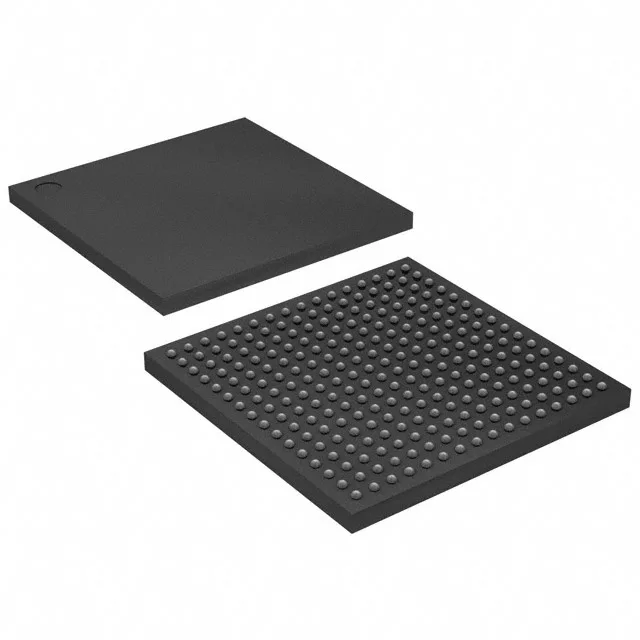
Intel 10M40DDF256C8G MAX 10 FPGA, 40K LE, 178 I/O
MPN10M40DDF256C8G
Active
Intel MAX 10 series FPGA/CPLD, 10M40DDF256C8G, 40,000 logic elements, 178 I/O, 1.29 Mbit RAM, 256-FBGA (17x17), 0°C to 85°C, dual supply 2.85V–3.465V.
$126.7300Ref. price · indicative, final on quote
Independent supplier — new & surplus stockAuthenticity-screened · ESD-safe packingListing updated Aug 2026
Specifications
| Parameter | Value |
|---|---|
| Series | MAX® 10 |
| Mounting | Surface Mount |
| Supply voltage | 2.85V ~ 3.15V, 3.135V ~ 3.465V |
| Operating temperature | 0°C ~ 85°C (TJ) |
| Package | Tray |
| Number of i (O) | 178 |
| Case | 256-LBGA |
| Total RAM bits | 1290240 |
| Number of LABs (CLBs) | 2500 |
| Number of logic elements (Cells) | 40000 |
Product details
Frequently asked questions
Is the 10M40DDF256C8G still active or is it end of life?
The 10M40DDF256C8G is end-of-life (eol_hot). Intel has discontinued production, and the part is available only through surplus and independent distribution channels. Sourced and quoted to order against an RFQ.
What are the exact voltage requirements for the 10M40DDF256C8G?
The core supply requires 2.85V to 3.15V, and the I/O bank requires 3.135V to 3.465V. Two separate regulated rails are needed; a single 3.3V rail does not satisfy both tolerances.
Can the 10M40DDF256C8G be programmed with the Intel Quartus Prime Lite software?
Yes, the MAX 10 series is supported by the free Intel Quartus Prime Lite Edition, which covers the device without a license cost.
What is the difference between MAX 10 and Cyclone 10 FPGAs?
MAX 10 devices integrate non-volatile flash configuration on-chip, enabling instant-on operation and eliminating an external configuration memory. Cyclone 10 FPGAs require an external configuration device or host and target higher logic density and performance, but at a higher BOM cost and board area.