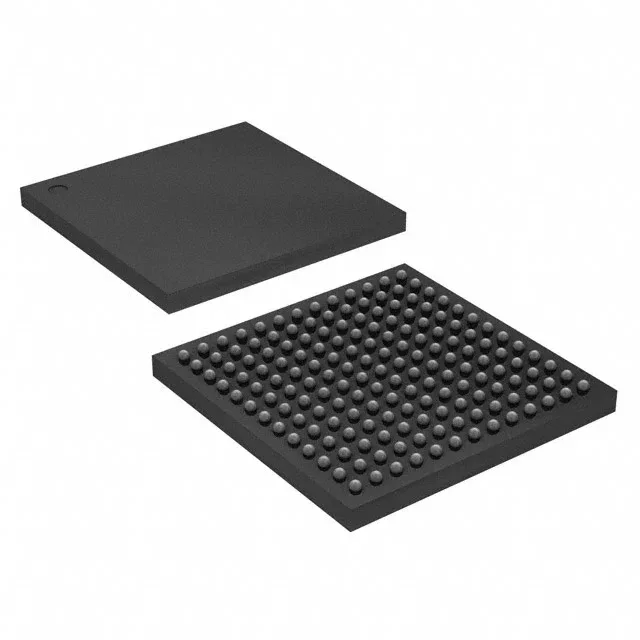
Intel 10M16SCU169I7P — FPGA / CPLD & Programmable Logic

Intel 10M16SCU169I7P MAX 10 FPGA, 16K LE, 130 I/O, 169-UBGA

MPN10M16SCU169I7P
Active

Intel MAX 10 series, 10M16SCU169I7P, FPGA with 16,000 logic elements, 562,176 total RAM bits, 130 I/O, 1.15V~1.25V supply, -40°C~100°C(TJ), 169-LFBGA package, Tray.

$4.0000Ref. price · indicative, final on quote
StockContact for availability
MOQ1 pcs
  • 100% new & originalTraceable channels only — no refurbs, no pulls, no remarked parts.
  • Date & lot codes on quoteStated per line before you commit; label photos on request.
  • MSL-compliant ESD packingMoisture-sealed bags with indicator cards; reels photo-verified.
  • PayPal buyer protectionPay by T/T, PayPal or Payoneer — card payments covered end to end.

Specifications

10M16SCU169I7P Technical Specifications
ParameterValue
SeriesMAX® 10
Mounting typeSurface Mount
Voltage1.15V ~ 1.25V
Operating temperature-40°C~100°C(TJ)
PackageTray
Number of i (O)130
Case169-LFBGA
Total RAM bits562176
Number of LABs (CLBs)1000
Number of logic elements (Cells)16000

Product details

The Intel 10M16SCU169I7P is a MAX 10 series FPGA delivering 16,000 logic elements and 562,176 total RAM bits in a 169-ball LFBGA package. It provides 130 user I/O and operates from a 1.15 V to 1.25 V core supply. This is the entry-level density tier of the MAX 10 family — sized for glue-logic consolidation, sensor interface bridging, or small control-loop acceleration where a full mid-range FPGA would overshoot the BOM. The industrial junction temperature range of -40°C to 100°C suits factory-floor equipment, outdoor telecom cabinets, and ventilated enclosures; it does not carry AEC-Q100 qualification for automotive under-hood deployment.

Supply and temperature — staying within the operating window

Core voltage range is 1.15 V to 1.25 V. Junction temperature rating is -40°C to 100°C.

Lifecycle and sourcing posture

The 10M16SCU169I7P carries an Active lifecycle status — no end-of-life notice, no last-time-buy pressure. Intel continues to manufacture the MAX 10 family, and this density/package variant remains in the current product portfolio. Sourcing runs through the standard independent distribution channel; availability and current pricing are confirmed at quote time against an RFQ. No official second-source exists for the MAX 10 architecture, but the 10M16DAF256A7G shares the same logic density and RAM in a larger 256-ball BGA with 178 I/O and an extended 125°C junction option — a functional alternative if the board can accommodate the larger footprint and the wider temperature grade.

Frequently asked questions

Is 10M16SCU169I7P obsolete?

No — the 10M16SCU169I7P has an Active lifecycle status. Intel lists it as current production with no discontinuation notice on file.

What is the difference between 10M16SCU169I7P and 10M08SCU169I7P?

The 10M16 variant doubles the logic density to 16,000 logic elements versus 8,000 on the 10M08. Both share the same 169-ball UBGA package, 130 I/O count, and 1.15 V to 1.25 V core supply — the 10M16 is the drop-in upgrade when the design outgrows the smaller device.

How to program 10M16SCU169I7P?

The MAX 10 family uses Intel Quartus Prime software for design entry, synthesis, and place-and-route. Programming is done via JTAG (IEEE 1149.1) through the dedicated TMS, TCK, TDI, TDO pins on the 169-ball BGA. The device supports active serial (AS) and passive serial (PS) configuration modes for in-system programming.