Active production, commercial temp grade
The 10CL040YU484C8G: The 0°C to 85°C (TJ) operating range puts it in the commercial temperature grade. That covers most indoor equipment and telecom central-office environments, but not an unventilated enclosure on a factory floor in summer — for that, the -40°C to 100°C sibling (10CL040YU484I7G) is the one to spec.
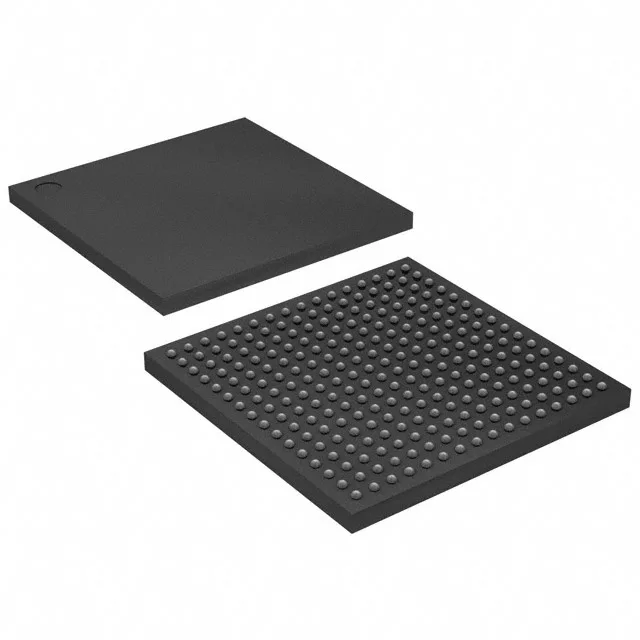
39,600 logic elements in a 484-ball BGA
The 39,600 logic elements place this in the mid-density tier of the Cyclone 10 LP family — enough for a soft-core processor, a few peripheral controllers, and some glue logic without bumping to a larger device. The 1,161,216 total RAM bits (about 142 KB) feed block memory for FIFOs, small frame buffers, or coefficient storage. If your design needs more on-chip memory, the MAX 10 10M40DCF484C8G packs 1,290,240 bits in a similar footprint. All 325 user I/O are brought out to the 484-ball UBGA (19x19 mm) — the same ball map as the 10CL040YU484C6G and 10CL040YU484I7G, so a single PCB layout serves all three speed and temperature variants.
Board-fit and rework considerations
That means a standard BGA rework station with a bottom preheater and a top nozzle matched to the package outline will handle removal and replacement. Pre-bake the board at 125°C for 8 hours if the parts have been exposed to ambient humidity; the UBGA mold compound is moisture-sensitive. The 1.2V core supply is the only voltage rail on this device — no separate VCCIO for each bank in this particular variant, so the decoupling plan is simpler than a multi-rail FPGA. Place 100 nF caps within 5 mm of each VCC ball pair, and a 10 µF bulk cap per bank corner.