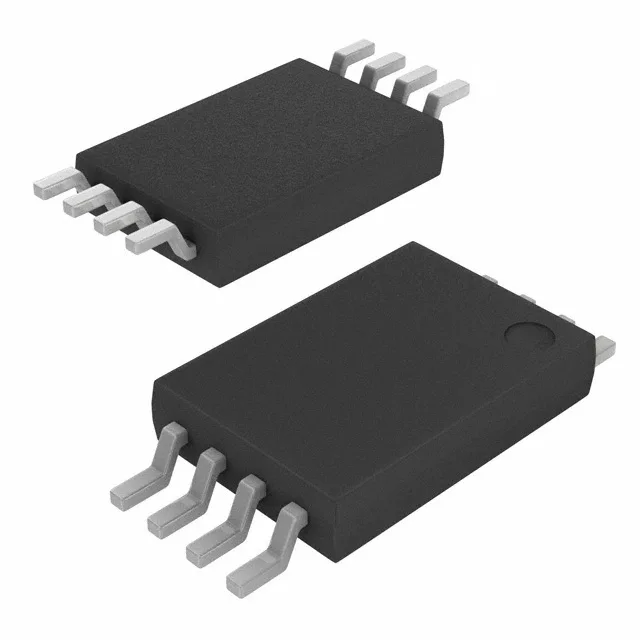
Diodes Incorporated LM2903AQTH-13
IC COMPARATOR 2 DIFF 8TSSOP
Full Technical Specifications
13 Parameters| Parameter / Attribute | Specification / Value |
|---|---|
| Type | General Purpose |
| Mounting | Surface Mount |
| Voltage - input offset | 2mV @ 5V |
| Voltage - supply, single (Dual (±)) | 2V ~ 36V, ±1V ~ 18V |
| Output current | 16mA @ 5V |
| Current - quiescent | 1.7mA |
| Current - input bias | 0.25µA @ 5V |
| Operating temperature | -40°C ~ 125°C |
| Grade | Automotive |
| Package | Tape & Reel (TR) Cut Tape (CT) |
| Qualification | AEC-Q100 |
| Case | 8-TSSOP (0.173\", 4.40mm Width) |
| Number of elements | 2 |
Need Stock or a Drop-in Second-Source for LM2903AQTH-13?
Package: DIP-8 / SOIC-8 · Pin-compatible replacements with immediate Shenzhen spot stock
The LM393 is the dual voltage comparator behind every threshold, window and alarm decision in instruments and industrial boards: 2V to 36V supply, ground-sensing inputs, open-collector outputs, and an 8-pin map that is identical to the LM358 op-amp pinout - the twin arrangement that makes socket-level swaps look possible and schematic-level swaps dangerous. Its family tree covers the whole repair shelf: temperature-grade siblings (LM193 / LM293 / LM2903 automotive) and the quad LM339 for four-channel boards. The two failure stories this page exists for: a comparator that stopped switching because the pull-up is missing, and an op-amp fitted into a comparator socket that saturates slowly and cannot wire-OR.
Verified Pin-Compatible Replacements (3 verified alternatives)
The Automotive Temperature Twin
Shenzhen Spot Stock (24-48h Dispatch)
The same dual comparator qualified across the wider temperature band - the 2903 grade covers the -40C class - electrically the same part, graded for industrial extremes and under-hood duty.
Same 2V to 36V envelope; open-collector outputs with the same sink capability.
The Quad Sibling - Four Channels, Different Body
Shenzhen Spot Stock (24-48h Dispatch)
The same comparator core four times over in a 14-pin body: two channels wired in parallel match an LM393 function (open-collector outputs tie together happily), and the spare channels sit unused.
Same 2V to 36V class; the quad body moves the supply to pin 3 and ground to pin 12 - never the dual arrangement.
The Pinout Twin - A Different Species in the Socket
Shenzhen Spot Stock (24-48h Dispatch)
The op-amp that fits every hole: identical 8-pin map, push-pull output, internally compensated for linear duty - and functionally not a comparator.
3V to 32V, push-pull output limited to the supply rails.
Buyer & Quality Checklist for Sourcing Alternatives
- The 8-pin map is shared: 1 out1, 2 in1-, 3 in1+, 4 GND, 5 in2+, 6 in2-, 7 out2, 8 V+ - on both the LM393 and the LM358. Nothing about the socket distinguishes a comparator from an op-amp; the schematic does.
- Open-collector law: the LM393 output is a switch to ground and needs a pull-up (or a load) to a rail up to about 36V regardless of supply. A comparator that measures dead after repair is most often a missing pull-up or a pull-up to the wrong rail.
- The reverse mistake is quieter: an LM393 - uncompensated, very high gain - fitted into a feedback amplifier oscillates; an LM358 fitted into a comparator node switches late and cannot drive wired-OR logic. Both pass a quick power-on test and fail the real one.
- Temperature grades substitute freely upward (LM2903 into an LM393 socket) and carry a slow-drift risk downward - the -40C grade exists for reasons a cold warehouse finds its own way to.
- Where the board needs a channel count the dual cannot give, the LM339 quad is the family answer - with a different 14-pin body (V+ on 3, GND on 12) that will not fit the 8-pin socket.
- Input common mode includes ground across this whole family, which is why it dominates single-supply divider sensing: a sensing node that can swing below ground (inductive flyback, battery reversal) needs input protection, not just a substitution.
Frequently Asked Technical Questions
Q: What is the difference between the LM393 and the LM358?
A: Same 8-pin pinout, different device class: the LM393 is a dual comparator with open-collector outputs built for threshold decisions; the LM358 is a dual op-amp with a push-pull output internally compensated for linear amplification. The sockets are identical, the functions are not.
Q: Can I use an LM358 instead of an LM393 (or the reverse)?
A: Only after checking the circuit function. An op-amp in a comparator socket needs its output behavior - pull-up, wired-OR, speed - re-examined; a comparator in a linear feedback circuit has no compensation and will oscillate. If the node only needs a slow threshold, the op-amp can work; if it needs open-collector drive, nothing about the op-amp will.
Q: Why is my comparator output dead after replacement?
A: The LM393 output is open-collector: without a pull-up resistor or a load to a positive rail it reads low or floating with nothing to measure. Check the pull-up first, then the supply (2V to 36V) and the reference divider.