What the hold and trip currents mean for your circuit
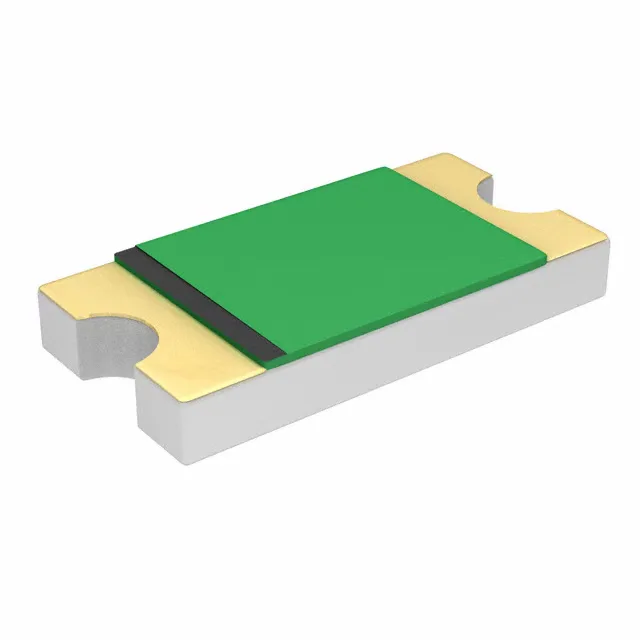
The 0ZCJ0016FF2E is a polymeric PTC resettable fuse — it stays low-resistance under normal current and switches to a high-resistance state when the current exceeds the trip threshold, protecting the downstream circuit without needing replacement after the fault clears. Rated at 160 mA hold current (Ih), the PTC will not trip below this level in a 25 °C ambient — the circuit runs normally. At 450 mA trip current (It), the device heats up and its resistance jumps to at least 5 ohms (post-trip max), limiting the fault current. The 300 ms trip time at 25 °C means the PTC responds fast enough to protect most low-current signal and power lines from sustained overcurrent — a short-duration spike below 300 ms may not trigger it, so the PTC ignores harmless inrush.
Automotive-grade qualification and package fit
AEC-Q200 qualified, meaning the PTC has passed the stress tests required for automotive-grade passive components — thermal shock, moisture resistance, vibration, and solderability. This opens the part for use in under-hood and cabin electronics where reliability is specified to the AEC-Q200 standard. Rated for 48 V max and 10 A max fault current — the PTC can be used on a 24 V or 48 V bus, and the 10 A rating means it survives a direct short on a supply capable of delivering up to 10 A without rupturing.
Sourcing and lifecycle posture
The part is stocked in tape-and-reel and cut-tape formats. Agency approvals include cURus and TUV, which certify the PTC meets the safety standards for overcurrent protection in North American and European equipment — a requirement for UL-listed or CE-marked end products.