Overcurrent protection for a 120 mA rail
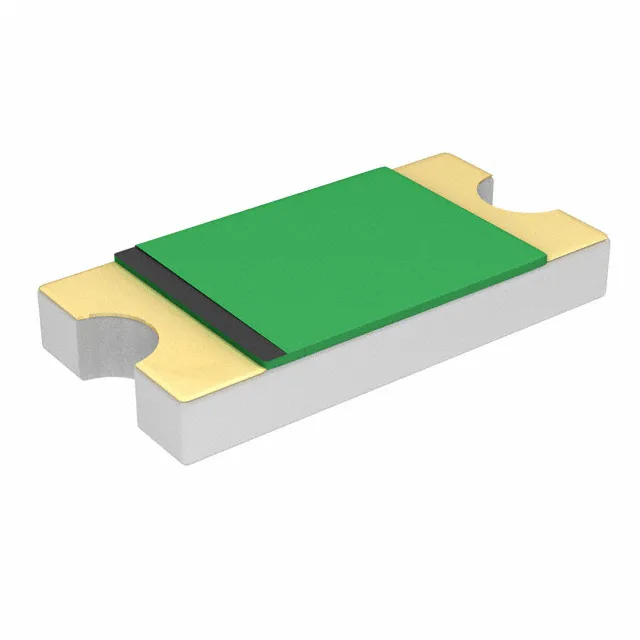
The Bel Fuse 0ZCJ0012FF2E is a polymeric PTC resettable fuse from the 0ZCJ series, designed to protect a circuit that normally draws 120 mA (Ih max) by tripping at 390 mA (It) within 200 ms. Rated for a maximum voltage of 48V and a maximum fault current of 10 A, it sits on the low-current, low-voltage side of a board — think sensor inputs, I/O lines, or CAN bus power feeds where a hard short needs to be cleared without replacing a fuse. The 1206 SMD package (3.25 mm x 1.65 mm, 0.85 mm thick) mounts directly on the PCB, and the Tape & Reel packaging means it feeds straight into a pick-and-place machine for volume builds.
AEC-Q200 and agency approvals
Qualified to AEC-Q200, the 0ZCJ0012FF2E meets the stress and reliability requirements for automotive-grade passive components — thermal shock, vibration, and moisture resistance are built into the qualification. It also carries cURus and TUV approvals, covering North American and European safety standards for overcurrent protection devices.
Resistance profile and circuit recovery
Initial resistance (Ri) is a minimum of 1.4 Ohms, and after a trip event the post-trip resistance (R1) rises to a maximum of 6.5 Ohms — this means the voltage drop across the device at 120 mA is under 0.17 V in the cold state, but after a fault the higher resistance limits the leakage current until the PTC cools and resets. The 200 ms time-to-trip at 390 mA is fast enough to protect most silicon before junction temperatures exceed ratings, but slow enough to ignore inrush from a bypass capacitor on the same rail.