JFET op-amp in a hermetic can — what the ratings tell you
The AD542LH is a single-channel JFET-input operational amplifier from Analog Devices, packaged in a TO-99-8 metal can for through-hole mounting. It targets precision analog signal conditioning where low input bias current and moderate bandwidth are required — think photodiode amplifiers, high-impedance sensor buffers, and precision integrators in lab instruments or medical electronics that stay within a controlled indoor environment (0°C to 70°C). The 10 pA input bias current is the standout parameter here: it lets you work with high source impedances (megaohm-range sensors) without the offset error that a bipolar-input op-amp would introduce. Supply span runs from 10 V to 36 V.
Package and mounting — through-hole, hermetic, no RoHS compliance
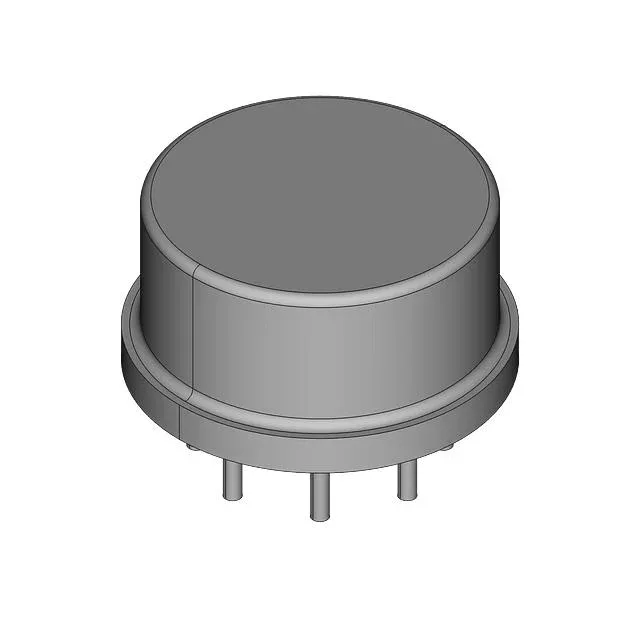
The TO-99-8 metal can is a hermetic, eight-lead circular package. It is a through-hole part — you solder it into a plated through-hole on the PCB. Note that the AD542LH is RoHS non-compliant. The leads contain lead (tin-lead finish) and the can itself may not meet the RoHS exemption limits. If your product must comply with EU RoHS or similar regulations, you will need an exemption or a different part.
Lifecycle and sourcing — active, but not RoHS
However, because it is RoHS non-compliant, it does not flow through the standard high-volume distribution channel for lead-free production. If you are dual-sourcing or looking for a functional equivalent, the AD712KNZ is a two-channel JFET op-amp in a DIP-8 package with a 4 MHz gain-bandwidth and 20 V/µs slew rate — faster and wider bandwidth, but two channels and a different pinout. The single-channel AD711JRZ-REEL7 (SOIC-8 surface mount) also offers 20 V/µs slew rate and 4 MHz bandwidth. Neither is a drop-in replacement for the TO-99-8 footprint, but they cover the same signal-conditioning role if your board can accommodate a different package.