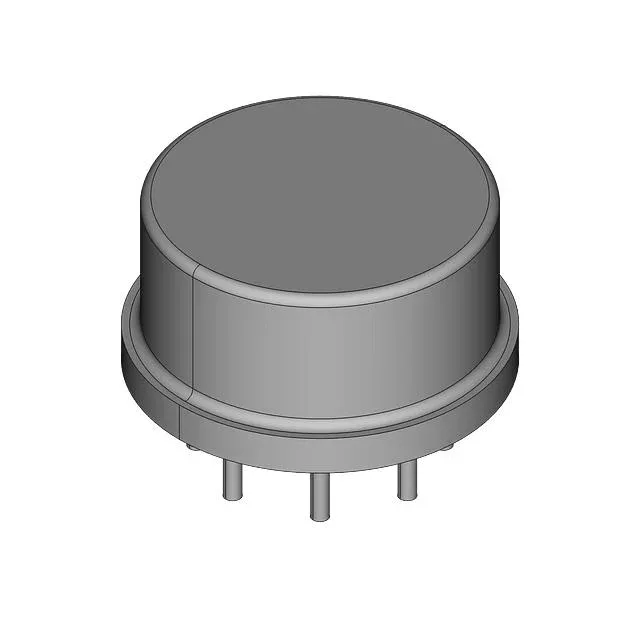
General-purpose op-amp in a TO-99-8 can
It offers a 100 µV input offset voltage and 25 nA input bias current, with a supply range spanning 10 V to 36 V (single or split supplies up to ±18 V).
A 100 µV input offset voltage is moderate for a general-purpose op-amp. In a DC-coupled signal chain with a gain of 100, that offset becomes 10 mV at the output — acceptable for many sensor conditioning and level-shifting tasks, but worth budgeting if you need sub-millivolt precision. The 25 nA input bias current is bipolar-stage typical; for high-impedance sources (e.g., photodiode or pH probe), a JFET-input op-amp would be a better fit.
TO-99-8 metal can — rework and handling
The TO-99-8 metal can is a through-hole package with eight leads arranged in a circular pattern. It's rework-friendly under a hot-air station — the metal body conducts heat evenly, and the leads are robust enough for multiple desolder/solder cycles. No moisture sensitivity level applies (hermetic seal), so no bake-out is needed before reflow.
The AD510JH operates from a minimum 10 V supply up to 36 V maximum. This covers common ±15 V and ±18 V analog rails found in test equipment and industrial control boards.
It is RoHS non-compliant (leaded solder finish on the TO-99 can), which is typical for hermetic metal-can parts and may affect its use in jurisdictions with strict RoHS exemptions.