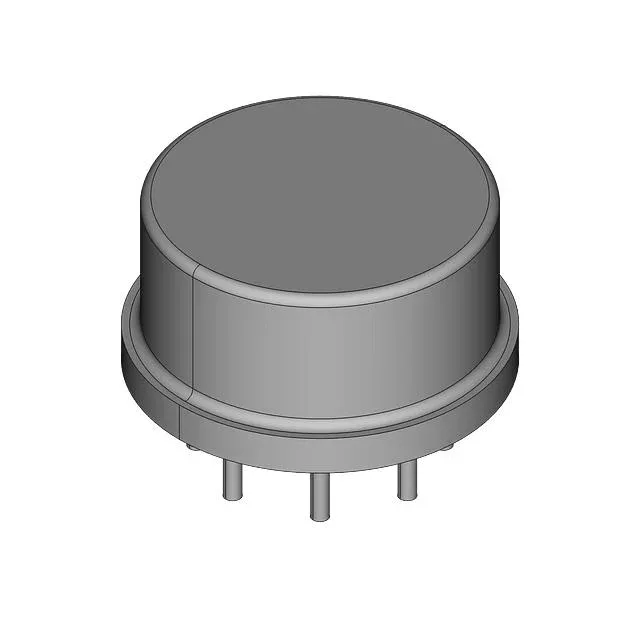
What this AD201AH is and where it goes
It's a through-hole part — hand-solder or wave-solder only, no reflow profile. The 44 V maximum supply span lets it run on ±15 V rails or a single 24 V to 36 V supply, which makes it a candidate for industrial analog front-ends, motor-drive current sensing, and bench power-supply control loops where you need headroom above the usual ±12 V.
Supply current sits at 1.8 mA — moderate, not micropower. If your board runs on battery and needs weeks of standby, this isn't the part; look at a CMOS rail-to-rail op-amp instead. The 30 nA input bias current is typical for a bipolar input stage. Pair it with source impedances above 10 kΩ and the voltage offset from bias current alone can exceed 300 µV, which eats into your signal budget. The 700 µV input offset voltage is fine for 8-bit or 10-bit accuracy; for a 12-bit system you'd want to calibrate or pick a precision amplifier with sub-100 µV offset.
RoHS non-compliant — plan for it
The AD201AH is RoHS non-compliant — the leads contain lead (Pb). That's an exemption for defense, aerospace, and certain industrial equipment where the mil-spec or reliability requirement overrides RoHS. If your design must meet EU RoHS or similar, this part won't pass incoming inspection. No lead-free equivalent exists in the same TO-99-8 package from ADI; you'd need to move to a surface-mount plastic package like the SOIC-8 ADA4004-1ARZ, which brings its own footprint and thermal trade-offs.
Lifecycle — still active, no LTB risk
The TO-99-8 metal can is a legacy package, so ADI's wafer fab and assembly line are still running it; if they ever issue a PCN, expect a multi-year phase-out window.