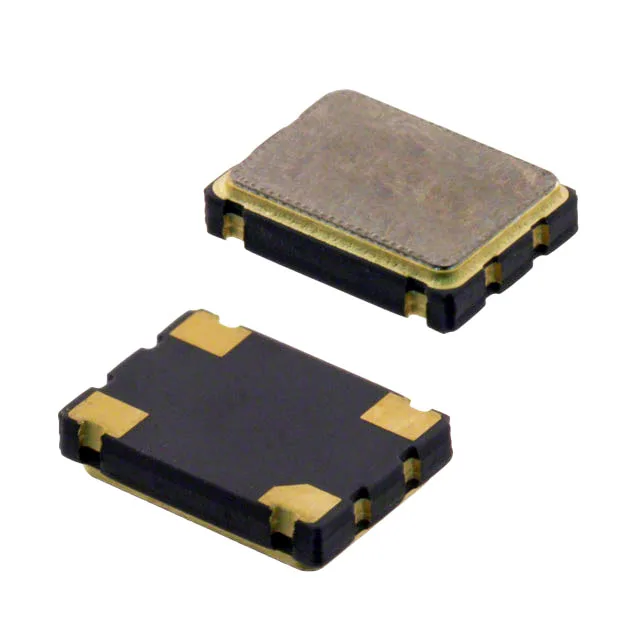
Abracon LLC ASV-3.579545MHZ-LC-T — Crystals & Oscillators

ASV-3.579545MHZ-LC-T Abracon XO, 3.579545 MHz, HCMOS, 3.3V

MPNASV-3.579545MHZ-LC-T
Active

Abracon LLC ASV series XO (Standard), 3.579545 MHz HCMOS, 3.3 V supply, ±50ppm, -40°C to 85°C, 10 mA active, 10 µA disabled, enable/disable, 4-SMD 7.00mm × 5.08mm.

$1.3500Ref. price · indicative, final on quote
Independent supplier — new & surplus stockAuthenticity-screened · ESD-safe packingListing updated Aug 2026

Specifications

ASV-3.579545MHZ-LC-T specifications
ParameterValue
TypeXO (Standard)
SeriesASV
MountingSurface Mount
Supply voltage3.3V
Current - supply10mA
Current - supply (Disable)10µA
Frequency3.579545 MHz
Frequency stability±50ppm
Operating temperature-40°C~85°C
Size (Dimension)0.276\" L x 0.200\" W (7.00mm x 5.08mm)
Height - seated0.071\" (1.80mm)
OutputHCMOS
PackageTape & Reel (TR); Cut Tape (CT)
FunctionEnable/Disable
Base resonatorCrystal
Case4-SMD, No Lead

Product details

Clock source: 3.579545 MHz HCMOS in a 4-SMD package

The ASV-3.579545MHZ-LC-T: Supply current is 10 mA maximum when the oscillator is running, dropping to 10 µA maximum when the enable/disable pin places it in shutdown — so a battery-powered or portable design can cut the oscillator completely when the downstream logic is asleep rather than leaving it burning power continuously.

Frequency stability and temperature grade

It is not an TCXO, so long-term drift and temperature transients are governed by the crystal's inherent curve rather than a compensation network. Tape-and-reel and cut-tape packaging gives flexibility for either high-volume SMT assembly or low-quantity prototyping without requiring a full reel.

Frequently asked questions

What is the ASV-3.579545MHZ-LC-T's output type and supply voltage?

The enable/disable pin lets the host MCU or power-management circuit cut the oscillator from the rail when not needed.

What does the enable/disable function do at 3.3 V?

When asserted, the oscillator runs and draws up to 10 mA. When de-asserted, the part enters a low-current disabled state consuming a maximum of 10 µA — the design can gate the clock without removing the supply rail entirely.