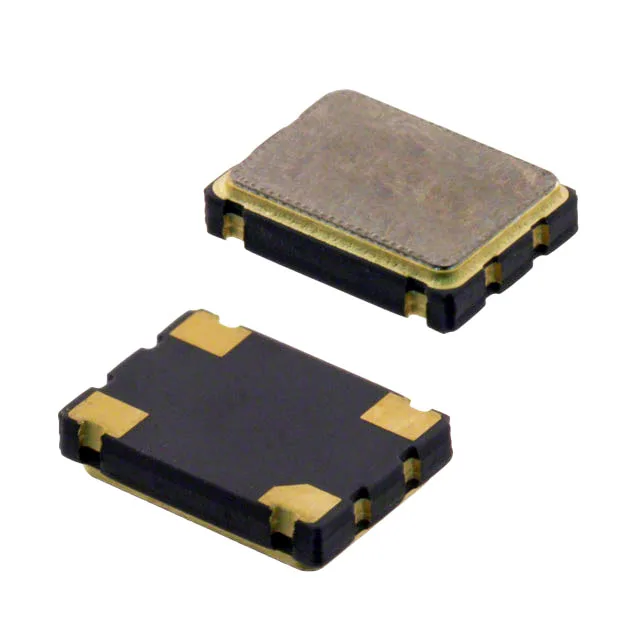
Crystal oscillator basics — what this part is
The ASV-18.432MHZ-E-T is a standard crystal oscillator (XO) from Abracon's ASV series — the frequency is set by an on-board quartz crystal resonator, not a MEMS structure, so the ±100ppm stability figure is rooted in the crystal's inherent tolerance and temperature drift rather than a compensation algorithm. The 18.432 MHz output is a classic telecom timing frequency: it divides cleanly to standard UART baud rates (9600, 19200, 115200), which is why you will see it on UART clocks, CAN bus reference clocks, and any 3.3 V digital board that needs a baud-rate crystal without invoking a PLL.
Enable/disable control and the power budget
The Enable/Disable pin gates the HCMOS output — when disabled the oscillator continues running internally but the output goes into high-impedance, and the supply current drops from a maximum of 15 mA down to 10 µA. For a microcontroller that gates its own clock during sleep, this part gives you the same power-saving behaviour without needing a separate clock gate on the board.
Frequency stability and temperature — the ±100ppm meaning
±100ppm stability across the full operating range of -20°C to +70°C means the oscillator stays within 100 parts per million of 18.432 MHz over temperature. At 18.432 MHz, that is a worst-case error of about ±1.84 kHz — tight enough for UART timing but not for precision protocol clocks like USB or IEEE 1588.
Footprint and supply rail for board design
Supplied on tape-and-reel or cut-tape — the standard packaging for automated pick-and-place lines.