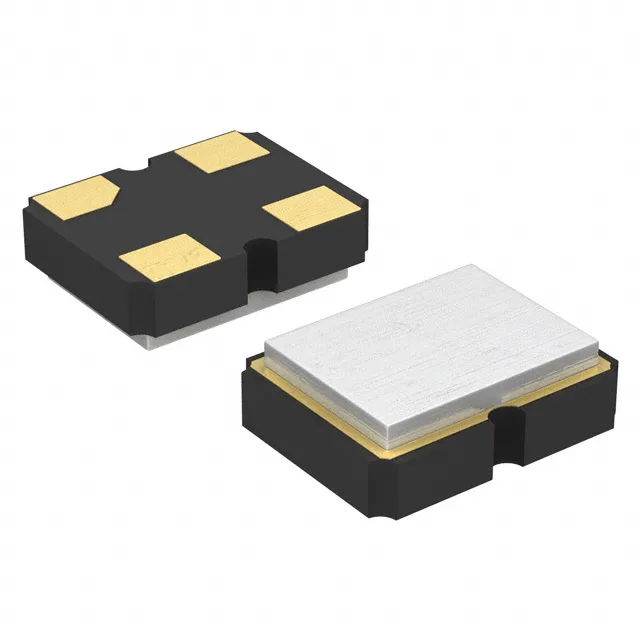
14.31818 MHz — the frequency defines the part
The ASE3-14.31818MHZ-KT: 14.31818 MHz is the NTSC color-burst subcarrier, and that is no accident — this oscillator lands squarely in video-timestamp and imaging-clock territory. Frame grabbers, broadcast timing chains, and any design syncing to composite video need exactly this frequency to derive the color subcarrier without division error. The same figure appears in telecoms as a reference crystal for PLL synthesizers targeting standard baud rates. CMOS output drives directly into TTL or CMOS logic thresholds without a termination network — the 4 mA max supply current is modest enough for battery-backed designs, and the Enable/Disable pin lets the board kill the oscillator completely rather than let it sit drawing standby current. That 10 µA disable draw is the floor the part sits at when the line is pulled low.
±30ppm over commercial temperature — what the stability spec allows
±30ppm at -10°C~70°C is the standard grade for non-telecom clock distribution. It covers microcontroller and DSP clocks, UART baud-rate references, and most industrial timing without correction. What it does not cover is SONET/SDH or GbE clocking, where ±50 ppm or tighter is the entry bar — this part is not a fit there. At 1.8V the oscillator sits squarely in the low-voltage rail band that most modern microcontrollers and radio SoCs specify for their reference clocks.