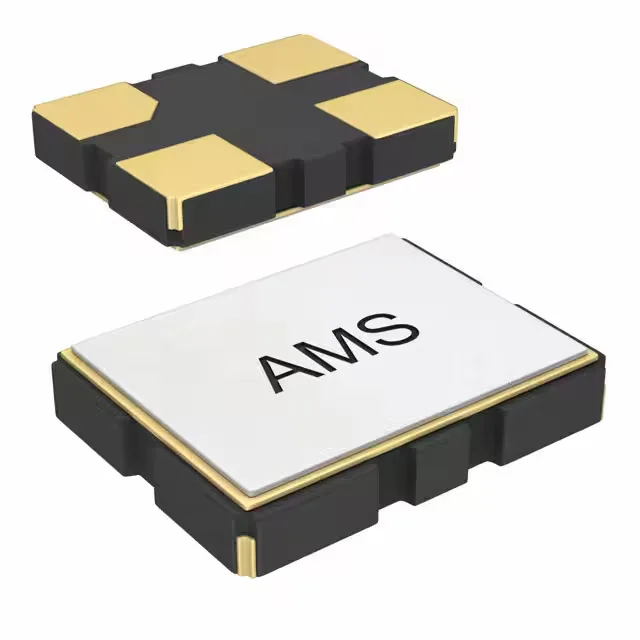
Abracon LLC ASE-44.000MHZ-ET — Crystals & Oscillators

ASE-44.000MHZ-ET Abracon 44MHz XO, 3.3V CMOS

MPNASE-44.000MHZ-ET
Active

Abracon ASE XO, 44 MHz, CMOS output, ±100ppm, 3.3V, enable/disable, 3.2×2.5 mm 4-SMD, -20°C~70°C, Tape & Reel / Cut Tape.

$27.7876Ref. price · indicative, final on quote
Independent supplier — new & surplus stockAuthenticity-screened · ESD-safe packingListing updated Aug 2026

Specifications

ASE-44.000MHZ-ET specifications
ParameterValue
TypeXO (Standard)
SeriesASE
MountingSurface Mount
Supply voltage3.3V
Current - supply19mA
Current - supply (Disable)10µA
Frequency44 MHz
Frequency stability±100ppm
Operating temperature-20°C~70°C
Size (Dimension)0.126\" L x 0.098\" W (3.20mm x 2.50mm)
Height - seated0.047\" (1.20mm)
OutputCMOS
PackageTape & Reel (TR); Cut Tape (CT)
FunctionEnable/Disable
Base resonatorCrystal
Case4-SMD, No Lead

Product details

44 MHz CMOS oscillator at 3.3 V

The ASE-44.000MHZ-ET: 44 MHz is a common microcontroller clock frequency; the ±100ppm frequency stability covers the typical UART baud-rate tolerance (1–2%) and general-logic timing budgets without needing a TCXO's tighter control. The Enable/Disable function draws 19 mA active and drops to 10 µA in shutdown — a microcontroller can gate the oscillator without external switching, cutting standby current on battery-powered or power-conscious designs.

3.2 × 2.5 mm SMT footprint and commercial grade

Operating range is -20°C to 70°C, the commercial temperature band — suited for indoor electronics, office equipment, and industrial enclosures that do not expose the oscillator to the full industrial -40 °C cold end.

Frequently asked questions

Is ASE-44.000MHZ-ET available via RFQ confirmation and what is the lead time?

Lead time follows standard replenishment from the distribution network — the exact window is confirmed when the quote is issued.

What is the output type of ASE-44.000MHZ-ET?

CMOS, driven from the 3.3 V supply. The logic-level swing makes it directly compatible with microcontroller clock inputs that expect a standard CMOS driver, without needing any termination or level-shift circuitry.

What does the ±100ppm stability mean for a clock source?

±100ppm means the output drifts no more than 100 parts per million from the nominal 44 MHz across the operating temperature range. Over a one-second interval that is a worst-case error of 44 Hz — well within the typical ±1.5% UART baud-rate tolerance, so serial communication stays within spec without needing a tighter reference.