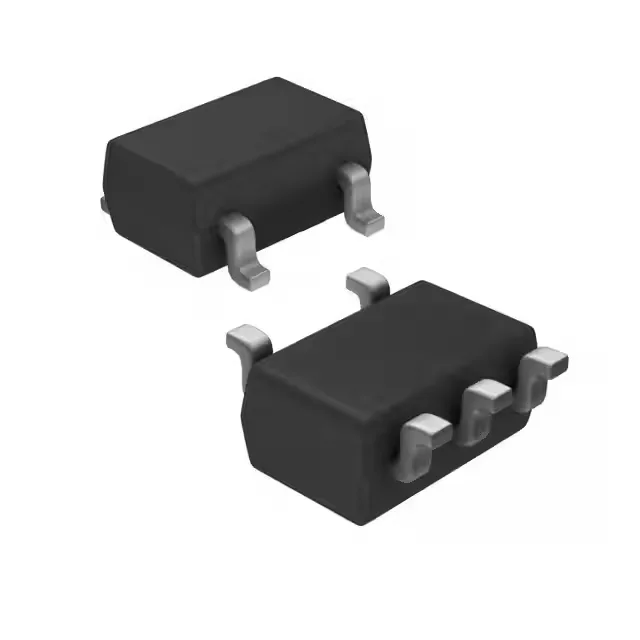
Toshiba Semiconductor TCR2EF30,LM(CT — Discrete Semiconductors

Toshiba TCR2EF30,LM(CT LDO, 3V Fixed, 200mA, SC-74A

MPNTCR2EF30,LM(CT
End of Life

Toshiba Semiconductor TCR2EF series, positive fixed-output LDO regulator, 3 V, 200 mA, SC-74A (SOT-753) surface-mount package, enable pin, over-current protection.

$0.34Ref. price · indicative, final on quote
PackagingSC-74A, SOT-753
StockIn Stock (20)
Lead timeIn Stock wk
MOQ1 pcs
  • 100% new & originalTraceable channels only — no refurbs, no pulls, no remarked parts.
  • Date & lot codes on quoteStated per line before you commit; label photos on request.
  • MSL-compliant ESD packingMoisture-sealed bags with indicator cards; reels photo-verified.
  • PayPal buyer protectionPay by T/T, PayPal or Payoneer — card payments covered end to end.

Specifications

TCR2EF30,LM(CT Technical Specifications
ParameterValue
SeriesTCR2EF
Output typeFixed
Mounting typeSurface Mount
Voltage - input5.5V
Voltage dropout0.2V @ 150mA
Voltage - output (Min (Fixed))3V
Current - output200mA
Current - quiescent60 µA
Operating temperature-40°C ~ 85°C
PSRR73dB (1kHz)
PackageTape & Reel (TR); Cut Tape (CT)
CaseSC-74A, SOT-753
Control featuresEnable
Protection featuresOver Current
Number of regulators1
Output configurationPositive

Product details

3 V fixed rail with 73 dB PSRR — what that buys you

The TCR2EF30,LM(CT is a 3 V fixed-output LDO from Toshiba's TCR2EF series, delivering 200 mA continuous with a positive output configuration. Its 73 dB PSRR at 1 kHz means ripple on the input rail at that frequency is attenuated by a factor of ~4500 — a 10 mVpp switching ripple on a 5 V bus becomes roughly 2.2 µVpp at the output, which keeps noise off sensitive analog or RF supply rails. The dropout voltage is 0.2 V max at 150 mA load, so a 3.3 V input rail with 300 mV of headroom still holds regulation down to the last 100 mV before dropout. Below that, the output falls out of spec — budget the dropout figure into your rail-stack calculation.

60 µA quiescent — the always-on cost

Quiescent current is 60 µA typical. In a battery-powered sensor waking once a minute to take a reading, that 60 µA draw on the always-on LDO dominates the sleep budget — a 500 mAh cell loses about 1.4 mAh per day just to the regulator's own consumption. If the load sleeps at 10 µA, the LDO's Iq is six times the load current; a lower-Iq LDO may be worth the swap for multi-year deployments. The enable pin (active-high) lets a microcontroller or power-management IC shut the output completely, cutting Iq to near zero in standby. This is the typical approach for sequenced power-up or for gating a 3 V rail that only needs to be live during active operation.

Package and temperature grade

Housed in a 5-pin SC-74A (SOT-753) package, supplier device package designation SMV.

Lifecycle and compliance

Over-current protection is built in — the output current is limited if the load exceeds the rated 200 mA, preventing damage to the regulator and downstream circuitry during a fault.

Frequently asked questions

What is the PSRR of TCR2EF30,LM(CT and why does it matter?

The PSRR is 73 dB at 1 kHz. This means the LDO attenuates input ripple at that frequency by a factor of about 4500, which is important for keeping switching noise from a buck converter or digital rail off a sensitive analog supply.

Will TCR2EF30,LM(CT drop into a board designed for TCR2EF28,LM(CT?

Yes, the package (SC-74A / SOT-753) and pinout are identical across the TCR2EF series. The only difference is the fixed output voltage — 3.0 V for the TCR2EF30 versus 2.8 V for the TCR2EF28. If the downstream circuitry can tolerate the 200 mV higher rail, the board layout is a direct swap.