Motor current and microstepping — the fit decision
The TB67S549FTG,EL is a fully integrated bipolar stepper motor driver with a 1.2 A continuous output rating per phase. That 1.2 A figure is the RMS current the DMOS output stage can sustain without thermal shutdown at 25°C ambient — for a NEMA 17 or small NEMA 23 motor with a phase current around 1 A, this driver runs with margin; for a motor rated 1.5 A or higher, the driver will current-limit and you lose torque at speed. Microstepping resolution goes from full-step down to 1/32 step, which means the motor can position in 32 discrete increments per full electrical step. For a 200-step/rev motor running at 1/32 microstepping, the effective steps per revolution become 6400 — smooth low-speed rotation and finer positioning than a 1/8 or 1/16 driver can deliver, at the cost of slightly higher switching losses in the DMOS stage.
Supply range and load voltage tolerance
The driver accepts a motor supply voltage from 4.5 V to 33 V, and the logic supply runs off the same rail. That 4.5 V floor means it can operate from a 5 V regulated bus or a lithium-ion cell near depletion; the 33 V ceiling covers 24 V industrial rails with margin for transients. The DMOS output stage's breakdown voltage must stay above the peak bus voltage — at 33 V max, the margin against a 24 V rail with 10 % regulation is about 6.6 V, comfortable for most factory-floor supplies. The output configuration is two half-bridges — one per phase of a bipolar stepper motor. Each half-bridge switches the motor winding between the supply rail and ground through the DMOS FETs, with PWM control from the interface pin. The PWM interface accepts a step/direction or clock-in signal; the internal sequencer generates the microstep current profiles.
Package, thermal path, and board integration
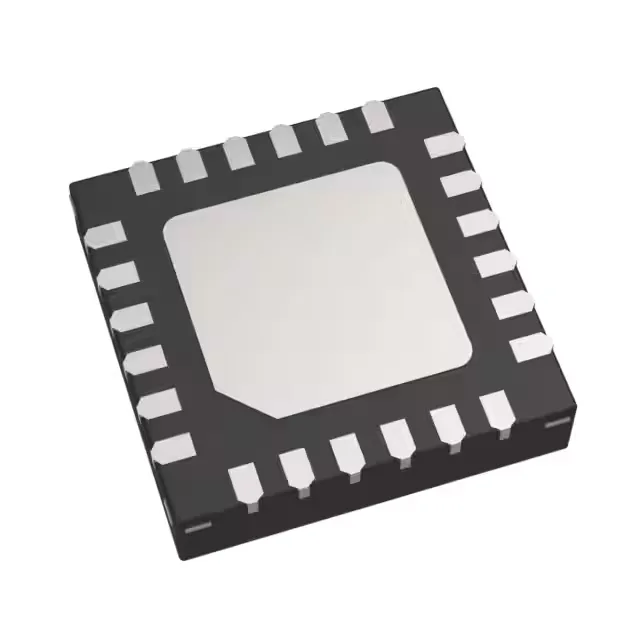
Without that pad connection, the thermal resistance rises and the driver will current-limit or shut down at lower ambient temperatures. The DMOS technology's on-resistance increases with junction temperature — at 85°C ambient, the effective Rds(on) can be 1.5× the 25°C value, so the I²R losses in the output stage rise and the available torque at speed drops. Budget the thermal derating into the motor sizing if the driver sits in a warm enclosure.